Western Bean Cutworm
Order Lepidoptera (moths and butterflies)
Family Noctuidae (owlet moths)
Species Striacosta albicosta
Description
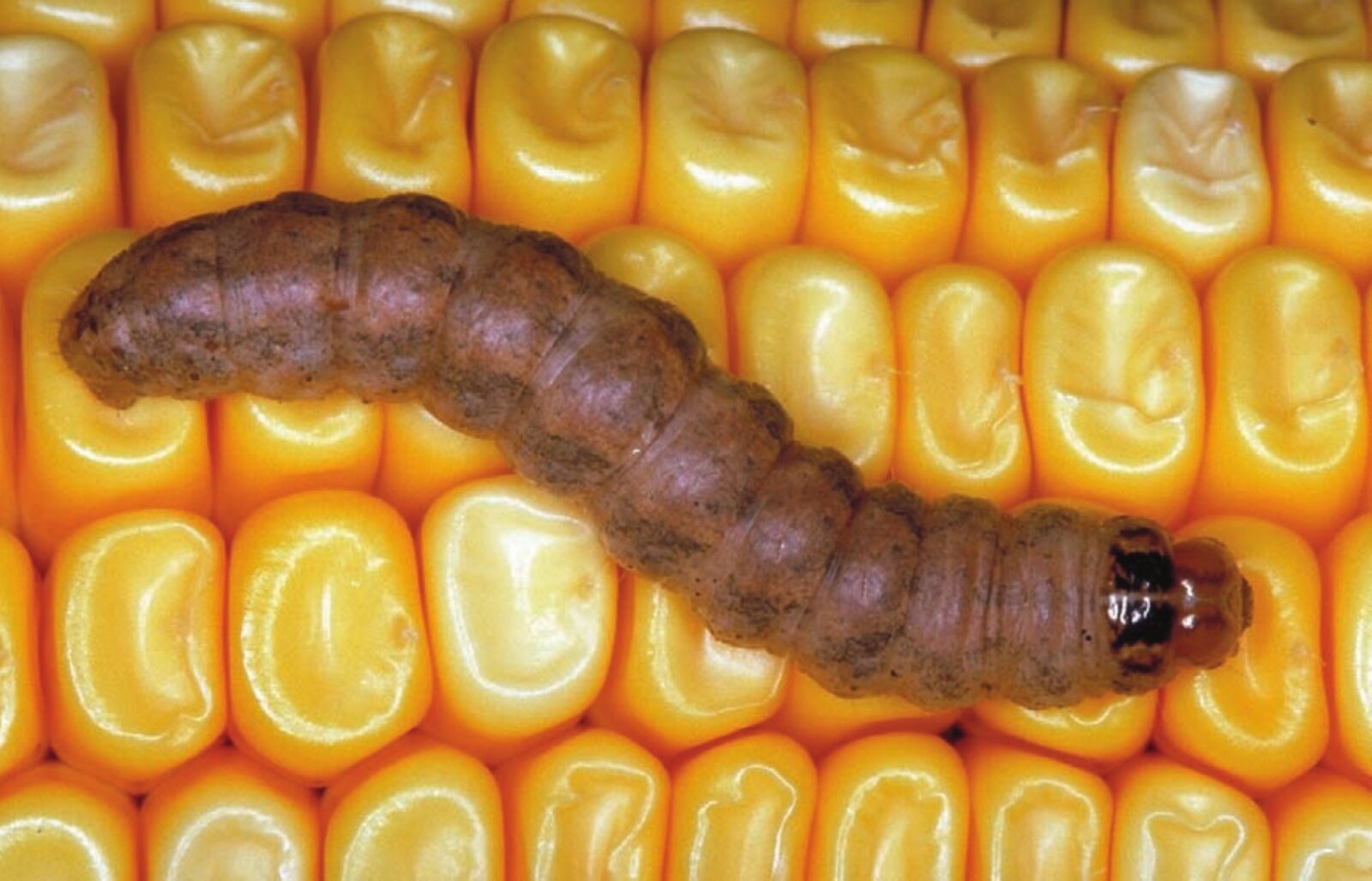
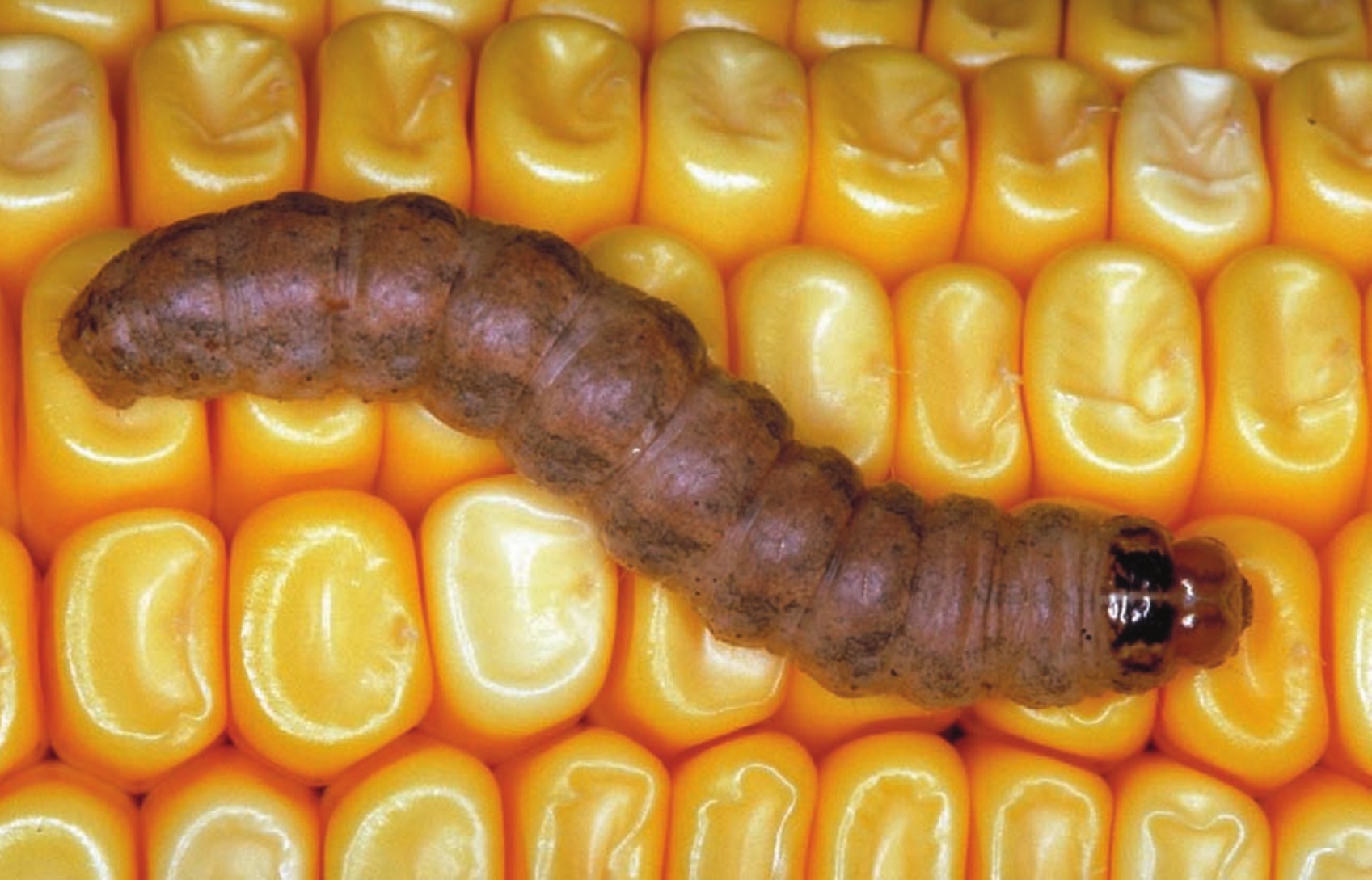
Western bean cutworm (Striacosta albicosta) is native to North America and has traditionally infested crops in the central High Plains and western Corn Belt states. Since 2000, however, western bean cutworm (WBC) has expanded its range eastward into the Midwest; it was first detected in Wisconsin in 2005.
A late-season pest of field and sweet corn, WBC larvae feed on corn ears, damaging and consuming kernels. Unlike corn borers, they do not tunnel into stalks. Heavy infestations have caused yield losses of up to 40% in Colorado. WBC damage to corn in Wisconsin has been sporadic, with low to moderate levels of damage since first detection in the state.
As its name suggests, western bean cutworm is also a pest of dry beans. Larvae feed on leaves and blossoms of dry beans, and chew holes in pod walls and developing seeds. WBC is not considered a pest of soybeans.
Appearance
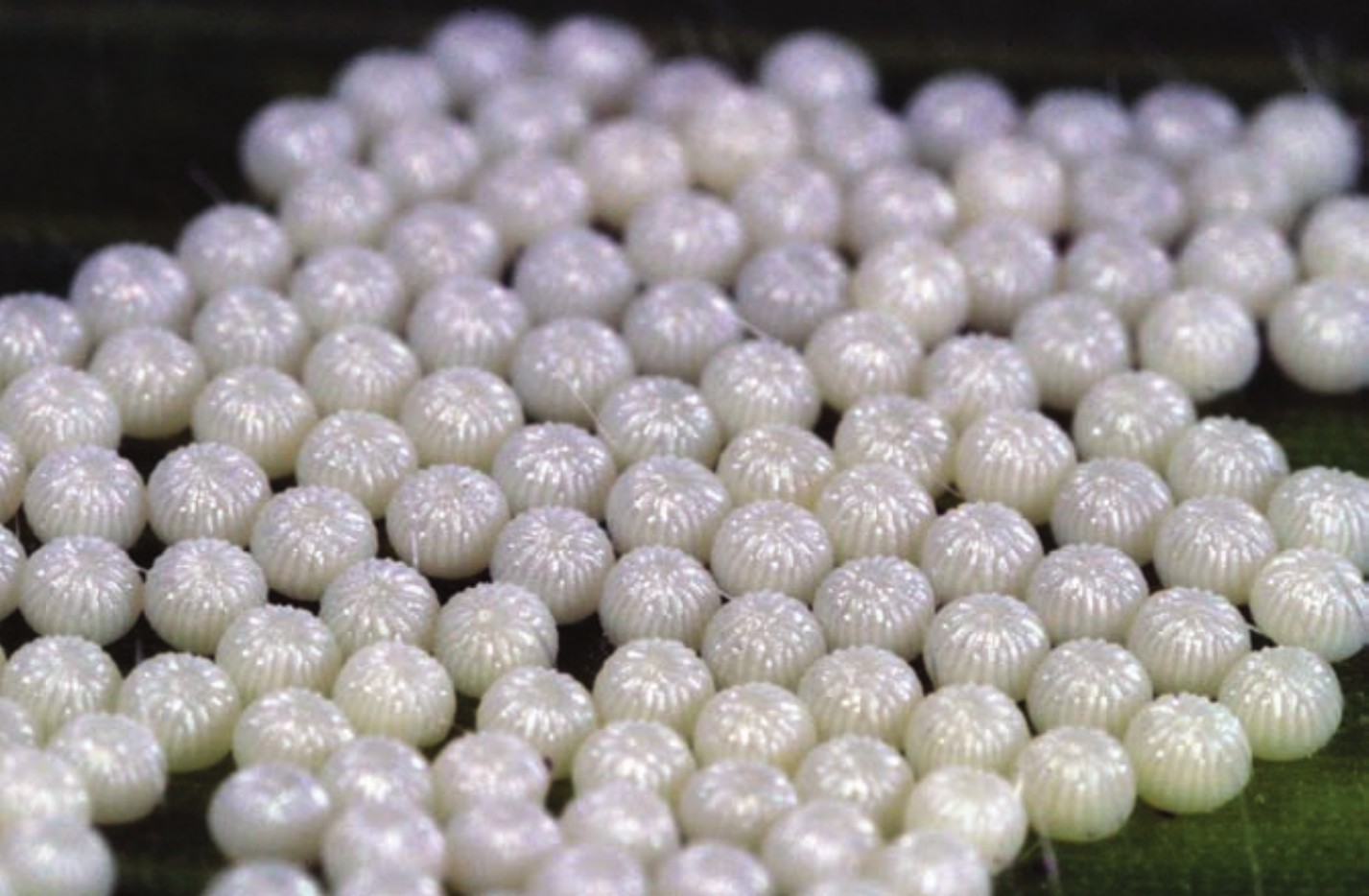
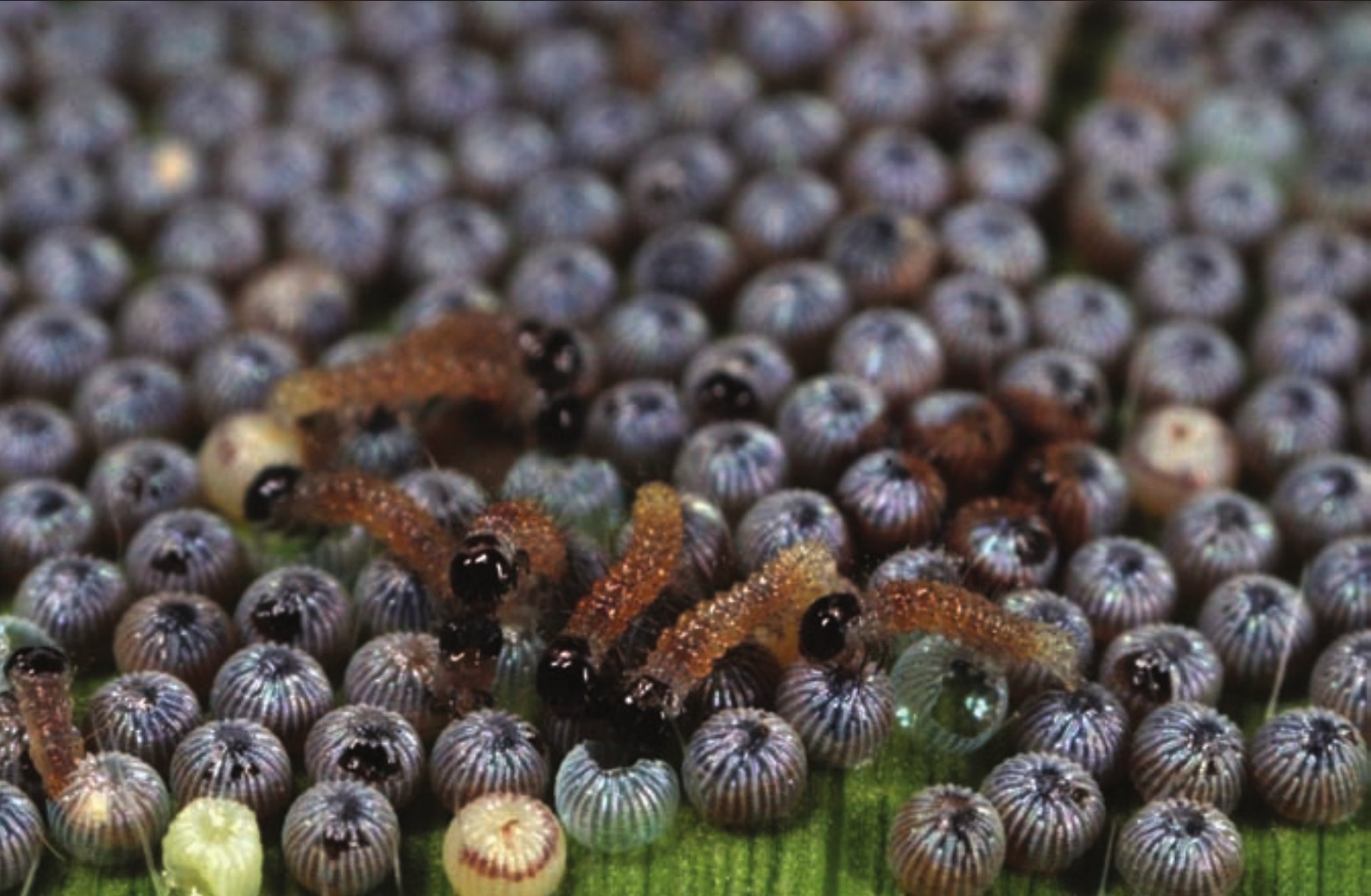
Eggs: Adult females (moths) lay round, white eggs on the upper surface of corn leaves. Each egg mass contains between 20 and 200 eggs (average 50 eggs per mass) clustered close together. Eggs change from creamy white to tan, then turn pale purple 12-24 hours before larvae emerges
Larvae: First instar larvae are dull orange with a black head. Full-grown larvae are approximately 1.5 inches long and are tan colored with a broad, faint tan stripe along the back and no markings on the sides. The most distinctive feature of the larvae is that the pronotum (“neck” area behind the head) has two broad brown stripes on it.
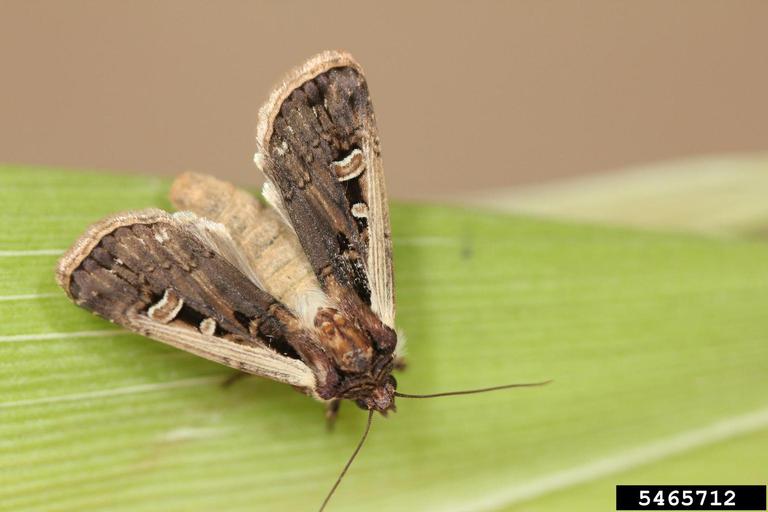
Adults: Adult WBC are brown moths 3/4-inch long with an extended wingspan of 1.5 inches. There are three distinctive markings on each forewing: a white bar along the front leading edge, a circular spot in the center, and a boomerang-shaped spot towards the outer edge.
Life cycle
WBC has one generation per year, with six or seven larval stages, and overwinters as a full-grown larva, inside a soil chamber. Spring development begins when temperatures exceed 50°F. Larvae pupate in May and moths begin to emerge from soil chambers in late June. Peak emergence in the Upper Midwest is typically between the second and third weeks of July.
The adult female moth is most attracted to corn just before tasseling and lays eggs primarily on the upper surface of the flag leaf (top-most leaf on the plant).
Larvae hatch 5-7 days later. Newly hatched larvae remain clustered together for several hours, feeding on the shells of their egg mass before dispersing. If the tassel has not yet emerged, larvae crawl into the whorl and feed on pollen. As the tassel emerges, larvae switch to feeding on green silks, entering the developing ear through silk channels.
By early September, mature larvae leave the ear and drop to the ground. They burrow into the soil where they create a chamber for overwintering.
Damage
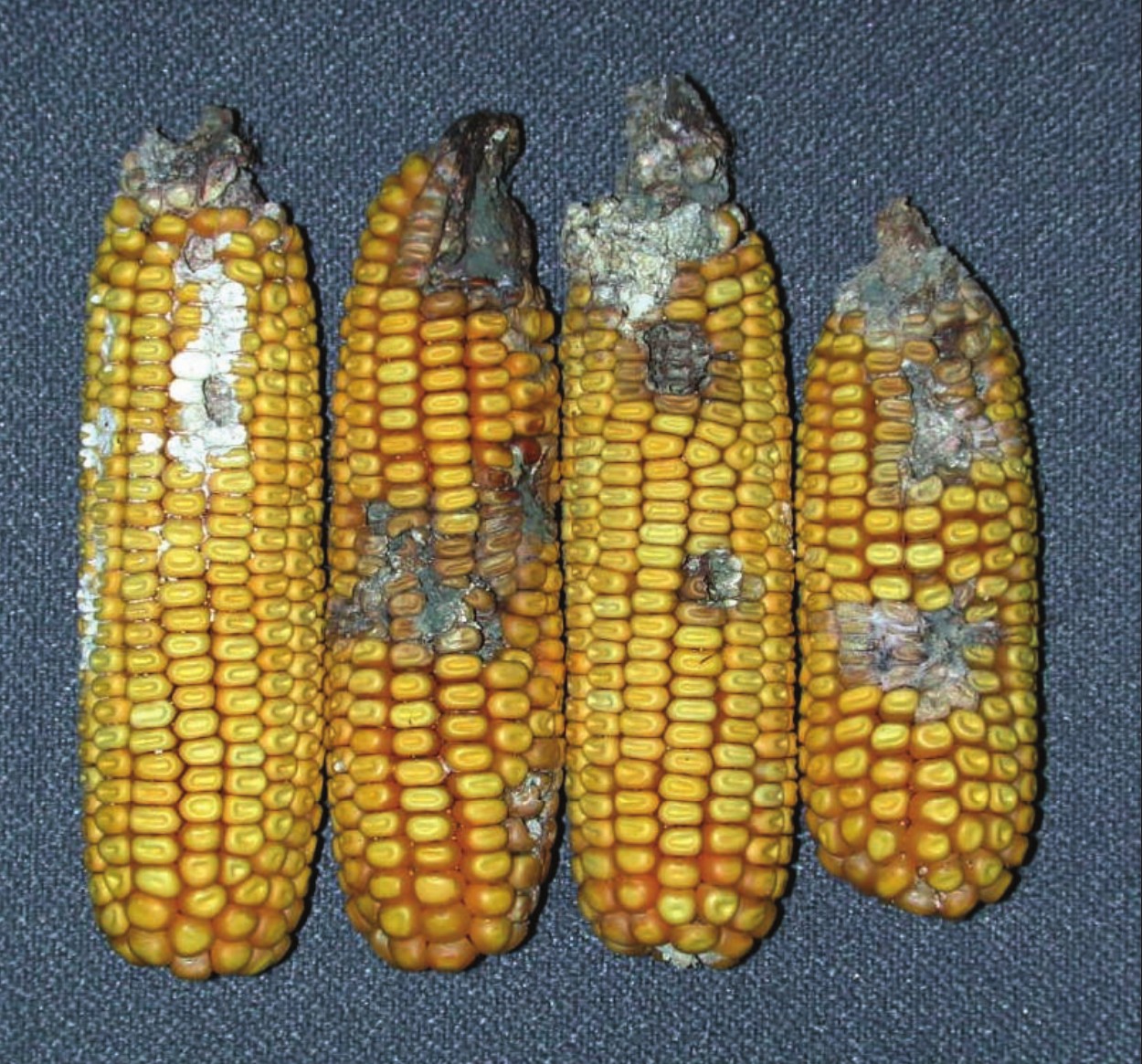
One behavioral characteristic of WBC larvae is that multiple larvae can feed on the same corn ear, resulting in severe damage. This feeding behavior is due to the fact that, unlike corn earworms, WBC larvae are not cannibalistic. If silks at the tip of the corn ear are already being fed upon by one of its “siblings”, WBC larvae will chew a hole through the husk on the side of the same ear.
Damage caused by WBC becomes evident between early August and early September. Damage will be more apparent towards the end of this period since larvae grow as they feed and larger larvae cause more damage. Damage by WBC will be easiest to detect in August when most of the larvae are still on the corn ears. Once mature larvae drop to the soil, it may be difficult to determine which corn ear pest (WBC, corn earworm, or second-generation European corn borer) has caused the damage.
The primary damage caused to corn is direct – WBC larvae feed on kernels at the corn ear tip, middle and near the shank. WBC feeding on corn ears may also create entry routes for secondary damage from fungal pathogens.
Scouting
Scouting field and processing sweet corn for WBC eggs and small larvae is critical to determine field infestation levels and prevent populations from reaching the economic injury level. Foliar insecticides effectively suppress WBC larval populations, but only if applied before larvae enter the ear.
There are two methods for determining when to begin scouting. One is to the predict the period of moth emergence using degree days. The other involves using pheromone traps to see when moths actually begin flying.
Using degree days to predict moth emergence
WBC larvae overwinter in the soil, pupate in the spring, and moths emerge in response to accumulation of heat units or degree days (DDs) rather than on the calendar. Depending on degree-day accumulations in a given year, WBC moth emergence begins in late June to early July and most eggs are laid during the period of peak moth emergence, typically mid-July in the Upper Midwest. Begin counting degree days on May 1 using a base temperature of 50°F and upper threshold of 86°F. Note the following milestones:
- 1320 DD50: Approximately a fourth of the moths have emerged at this point; field scouting should begin.
- 1422 DD50: Half the season’s WBC moth population has emerged; known as peak flight period.
Using pheromone traps to monitor flights
Pheromone traps use a WBC pheromone lure to attract male WBC moths. The pheromone lure mimics the chemical structure naturally secreted by WBC females to attract a mate. You can make your own trap (see directions below) or rely on regional trap catch information (see DATCP Home Crop Pest Trap Network).
Traps should be set by July 1 and monitored weekly or more frequently until trap captures decline in August. When checking traps, empty liquid into a jar, keep a running count of WBC moths, and replenish the trap with the water-antifreeze mixture.
Pheromone lures should be replaced after 4 weeks. Lures can be ordered online from retailers including Great Lakes IPM and Trece.
Making a pheromone trap
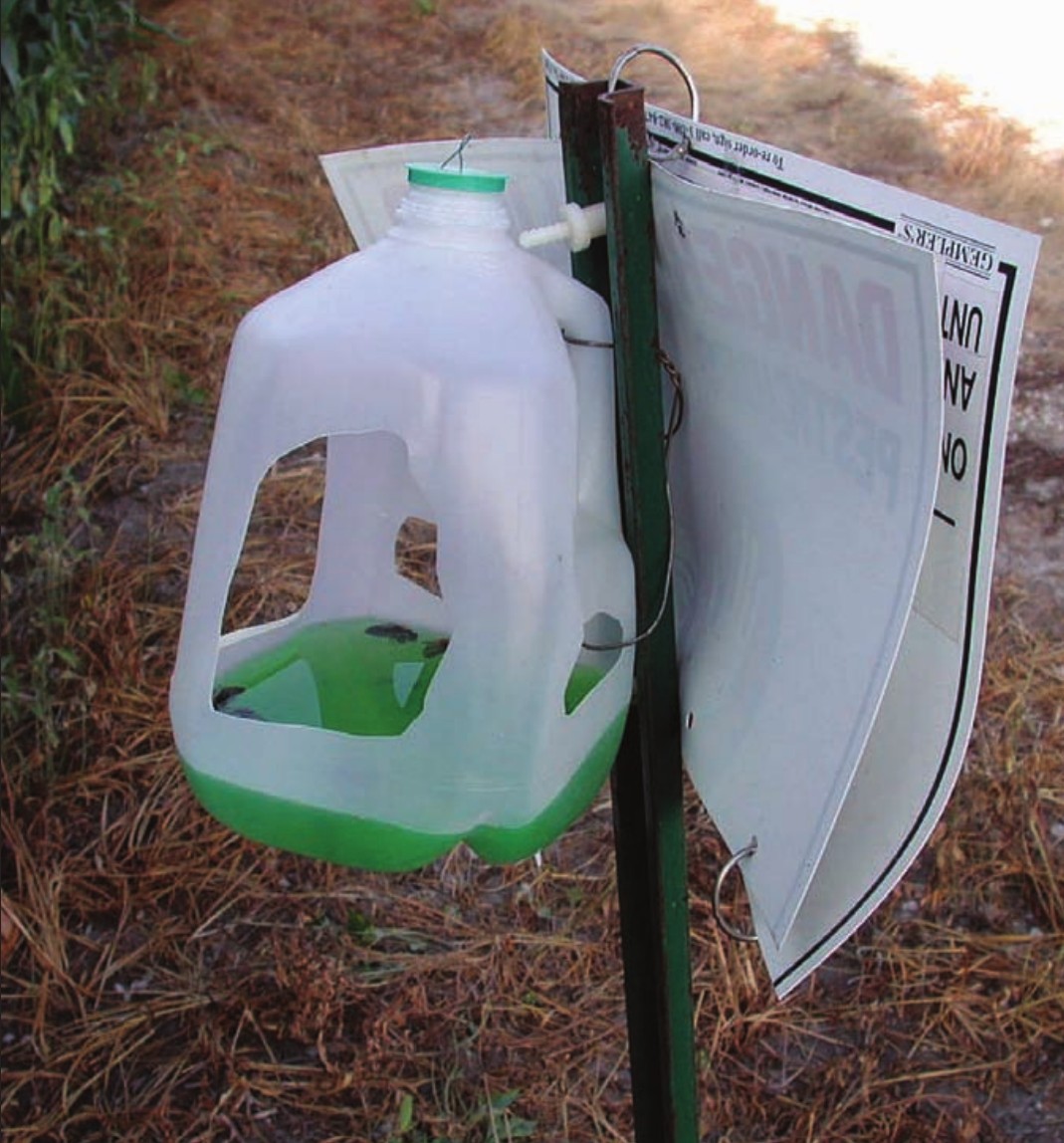
What you’ll need: a 1-gallon plastic milk jug with lid, a large paper clip, a western bean cutworm lure, propylene (not ethylene) glycol antifreeze, dish soap, water, a 4-foot high post, and wire.
- Starting 2 inches from the bottom of the milk just, cut 4-inch by 4-inch square openings on all four sides.
- Bend the paper clip into an “S”-shaped curve. Puncture the rubber lure with the end of the paper clip and slide the lure onto one end.
- Puncture a small hole in the milk jug lid and attach the paper clip so the pheromone lure hangs inside the jug.
- Mount the trap on a 4-foot high post at the edge of a corn field.
- Fill the bottom of the trap with a 4:1 mixture of water to antifreeze, plus a few drops of dish soap.
Timing and technique for scouting fields
Once WBC degree-day accumulations reach 1320 DD50 (25% moth emergence), or when the first moths are detected in a pheromone trap in your area, examine 20 consecutive corn plants at five locations in the field to obtain a representative field sample. Check the upper three or four leaves of each plant for presence of WBC egg masses and small larvae. Scout field corn hybrids or processing sweet corn varieties in different stages of development separately. In field corn planted to a Bt corn hybrid with WBC resistance, remember to scout the non-Bt refuge for WBC. Continue scouting fields for 7-10 days after the peak flight to detect eggs and larvae.
Threshold levels for field and sweet corn
For field corn, foliar insecticide treatment should be considered when 8% of corn plants sampled (8/100) have egg masses and/or small larvae. For processing sweet corn, the threshold is lowered to 4% infestation.
Management
Biological and natural controls
Natural control plays a key role in regulation WBC populations. Heavy rains can cause extensive mortality of early instar larvae as can cold weather and high winds. Colder winter temperatures will kill WBC larvae overwintering near the soil surface.
Several predatory insects feed on WBC larvae including larval and adult lady beetle stages, as well as damsel bugs and spiders.
WBC larvae are susceptible to a naturally occurring disease cased by the microsporidian Nosema sp., but the impact of this disease is unknown.
Cultural control
Cultural controls such as tillage are not proven to be effective against WBC. Although plowing or disking soil may reduce survival of overwintering larvae in soil chambers, the effectiveness of tillage as a management tool requires further evaluation before it can be recommended as a cultural control.
Chemical control
Application timing is critical for foliar insecticides to be effective. If eggs have hatched in fields that have reached or exceeded the economic threshold, insecticide should be applied after 95% tassel emergence but before larvae enter the ears. If egg hatch has not yet occurred and plants have tasseled, treat as close to expected egg hatch as possible, when egg masses have reached the purple color stage indicating 12-24 hours to hatch.
Foliar insecticides can be applied by air or high-clearance ground equipment. Select and insecticide labelled for WBC larvae on field or sweet corn with residual activity of a few days. Follow label directions to ensure sufficient water volume and coverage.
Refer to the UW-Extension publication Commercial Vegetable Production in Wisconsin (A3422) for an updated list of registered insecticides and management recommendations.
Transgenic Bt corn hybrids
Transgenic corn is another option for managing WBC in field corn. Bt corn hybrids are genetically modified by inserting a gene from an unrelated organism, the soil bacterium Bacillus thuringiensis (Bt). Spores produced by the bacterium contain a protein which, when ingested by a susceptible insect, ruptures the insect’s midgut membrane, prevents further feeding, and kills the insect. WBC larvae ingest the Bt toxin when feeding on Bt corn plants. One group of Bt corn hybrids offers protection against “caterpillar” pests such as European corn borer and WBC. Note that not all Bt corn hybrids have WBC on the label. Before purchasing, check the Bt corn hybrid label and check with your UW-Extension county agent if you have questions.
Bt corn and insect resistance management (IRM)
Widespread adoption of Bt corn has increased the number of acres where target insect pests are exposed to Bt active ingredients each growing season. This creates potential for WBC and other target pests to develop resistance to Bt. Therefore, and insect resistance management (IRM) plan becomes more important in preserving the usefulness of Bt traits. The IRM plan is implemented by planting refuge corn acres on each farm where a Bt corn hybrid is planted. Refuge corn acres do not contain the Bt insect trait used in the Bt planting. The refuge must be planted to 20% of the corn acres on each farm, and there are specific configuration and distance requirements for the refuge in relation to the Bt corn planting.
The aim of IRM is to maintain Bt susceptible insect populations by way of a refuge. The refuge provides corn crop habitat that allows target pest insects to feed, mate and reproduce without being exposed to the Bt trait. Without a refuge, target insect populations that are exposed to Bt corn each growing season over multiple generations will eventually become resistant to Bt. Mating between Bt susceptible insects from the refuge and potential resistant insects ensures that susceptibility to the Bt toxin is passed on to the next generation.
Planting a refuge is required by law through the U.S. Environmental Protection Agency (EPA) as a condition of Bt corn hybrid registration and market availability. Contact your county Extension office for more information.
Adapted from the 2008 UW Extension publication “Western Bean Cutworm: A Pest of Field and Sweet Corn (A3856)” written by Eileen Cullen and Jigyasa Jyotika.
Last updated: