Chemical Control
Always use chemical control strategies as part of a program of integrated pest management, spraying only when necessary to control problem pests, and following all federal and local laws regarding pesticide handling and application.
More information about pesticides and their use is available in the UW Extension publication Commercial Vegetable Production in Wisconsin (A3422). This guide also contains lists of registered insecticides and management recommendations for common Wisconsin vegetable crops.
Pesticide efficacy trials
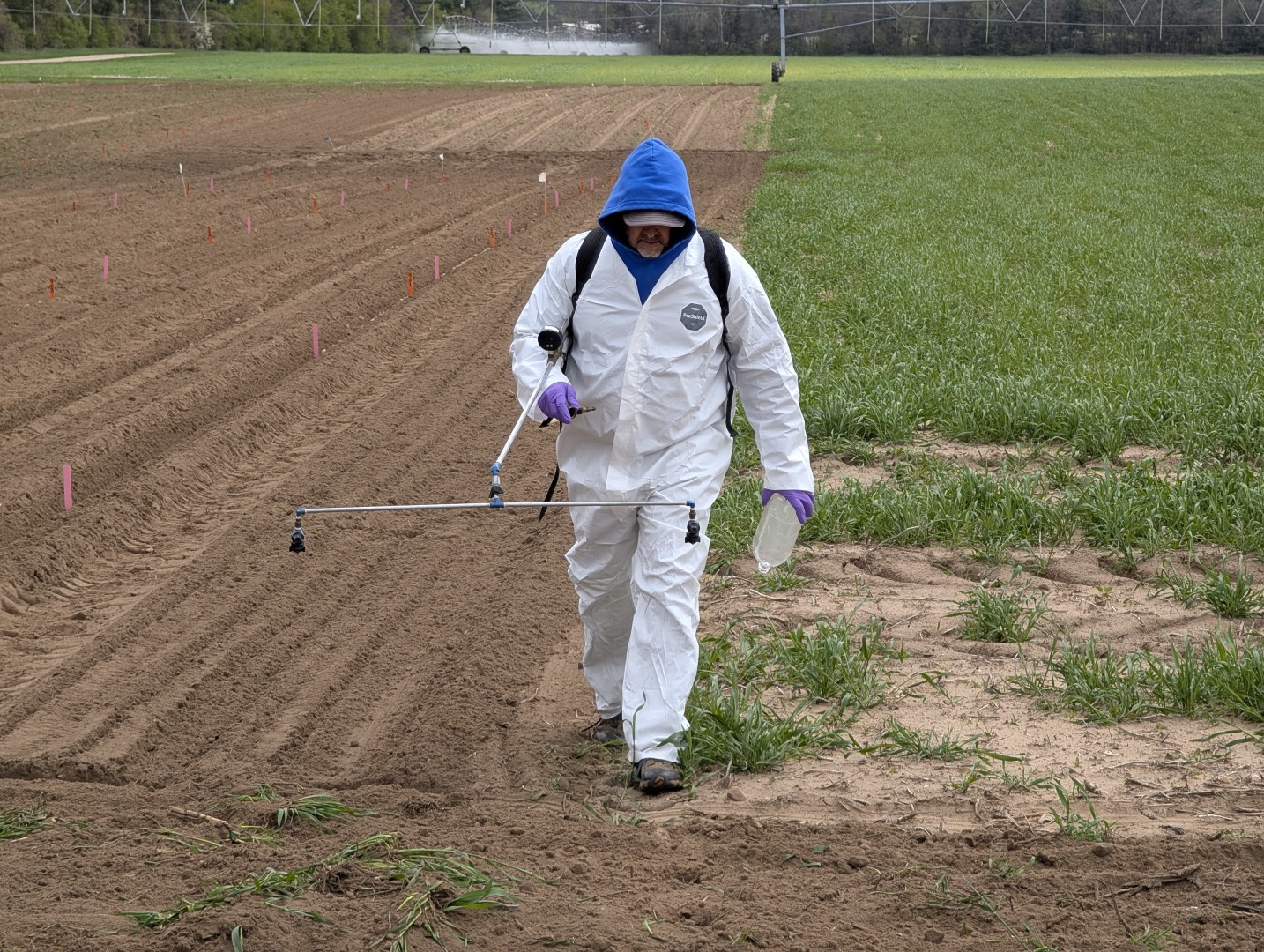
Each year, our lab conducts field trials of registered insecticides and new experimental products aimed at determining effective usage rates and spray programs for these products while maintaining pest levels below economic thresholds.
Resistance management
Whenever pesticides are used to control pest problems, there is potential for the development of pest populations that are resistant to the pesticides used. It is therefore important to use pesticides judiciously to prevent, or at least delay, the development of resistant pests. Resistance management attempts to prevent, delay, or reverse the development of resistance. It is a complex task that involves more than just pesticides. You should incorporate the following practices into a resistance management program:
- Use an integrated pest management program. Combine all available control measures (chemical and non-chemical) into a practical pest management program.
- Use pesticides only when needed. A pest population can develop resistance to a pesticide only when you use that pesticide against it. Therefore, if you use the pesticide when you don’t need to, you may unnecessarily increase the proportion of resistant individuals. Likewise, poor timing of a pesticide application can increase the risk of disease development. Fungicides and bactericides are generally more effective as protectants when applied before signs of pathogens (e.g., spore masses, bacterial ooze) are visible. If you apply the pesticide after such signs appear, more individuals will be exposed to the pesticide and there will be a greater chance that at least some of those individuals will be resistant to it. Such resistant individuals will then become predominant and control will be much more difficult to achieve.
- Apply pesticides at the proper rate. Using higher labeled pesticide rates to try to eradicate pests not only wastes money (because eradication is usually impossible) but also kills a larger proportion of susceptible pests. As a result, the proportion of resistant individuals among survivors will be even larger.
- Use pesticides from different chemical families. Try to do this whether you apply pesticides against a pest once or several times a year. This way, pests resistant to the first pesticide will be killed by the second. The pesticide table that follows includes resistance management information.
Last updated: