Colorado Potato Beetle
Order Coleoptera (beetles)
Family Chrysomelidae (leaf beetles)
Species Leptinotarsa decemlineata
Description
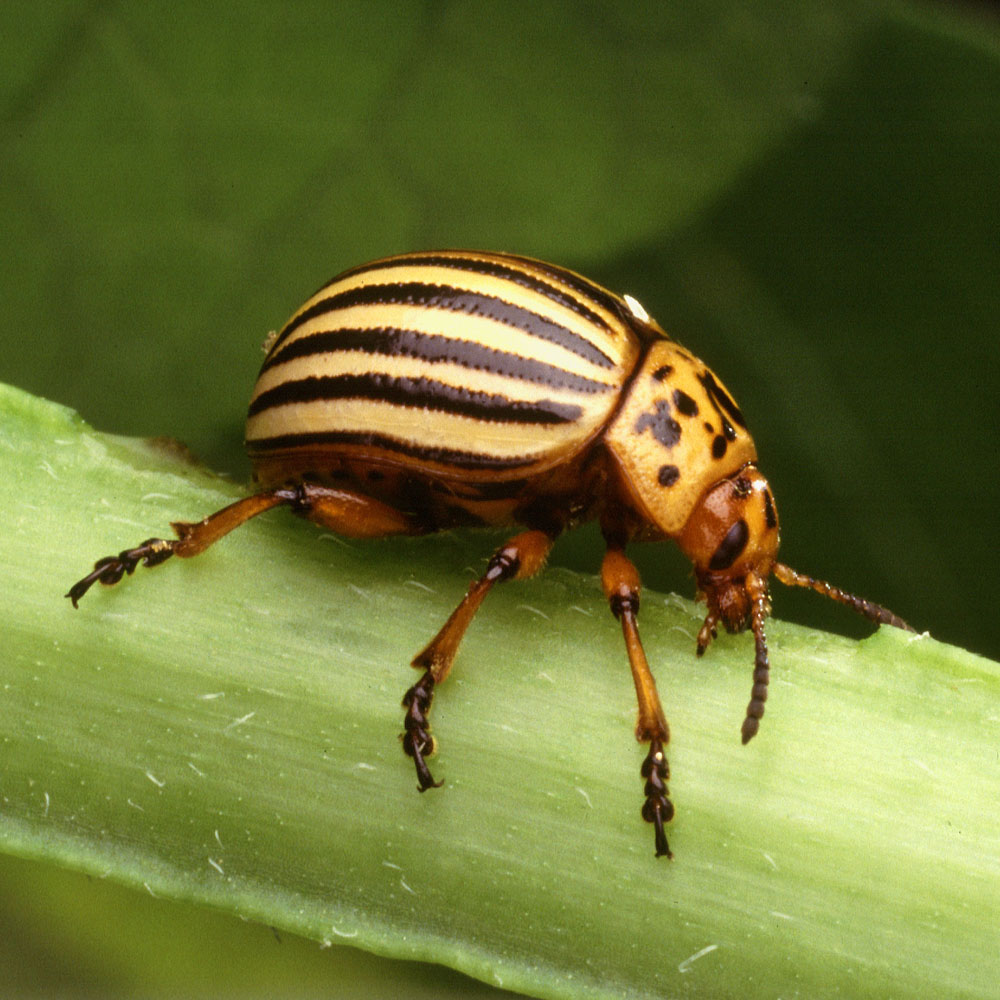
The Colorado potato beetle is a significant pest of potato, eggplant and pepper in home gardens as well as fresh market agricultural production. When not controlled, Colorado potato beetle (CPB) can completely defoliate plants resulting in serious yield losses or even plant death. Beetles prefer to feed on potato, but will also use eggplant and other solanaceous crops. Both larval and adult life stages commonly cause damage to plants throughout the growing season. CPB is a persistent pest annually, once an infestation occurs beetle populations tend to increase annually. When potato is unavailable in the environment CPB can utilize alternate solanaceous host plants such as eastern black and deadly black nightshade, jimson-weed, Carolina horse-nettle and buffalo-bur. Common solanaceous weeds in the environment are thought to provide a green bridge enabling potato beetle colonization into new environments.
Life cycle
Adult CPB are easy to spot in the garden. They have vivid-yellow shells with ten black running the length of their shell. Beneath the shell adult bodies are rusty orange in color. Head capsules are bright orange with several black spots. The adult beetles average 9 mm long and 6 mm wide. Female adults are extremely fecund and can lay between 300 and 800 eggs. Egg masses are bright yellow to orange in typically found in clusters of ten to thirty eggs on the undersides of leaves.
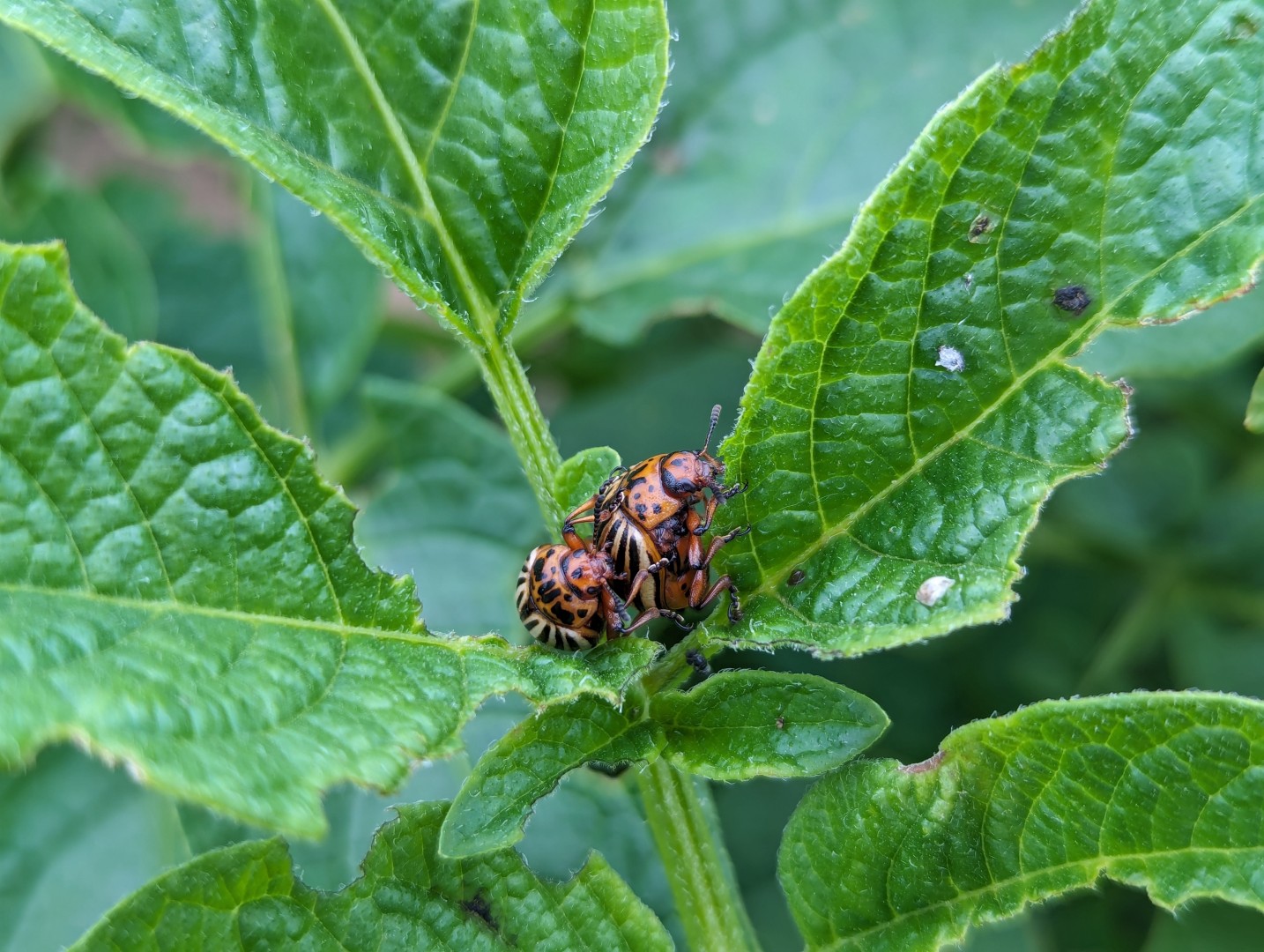
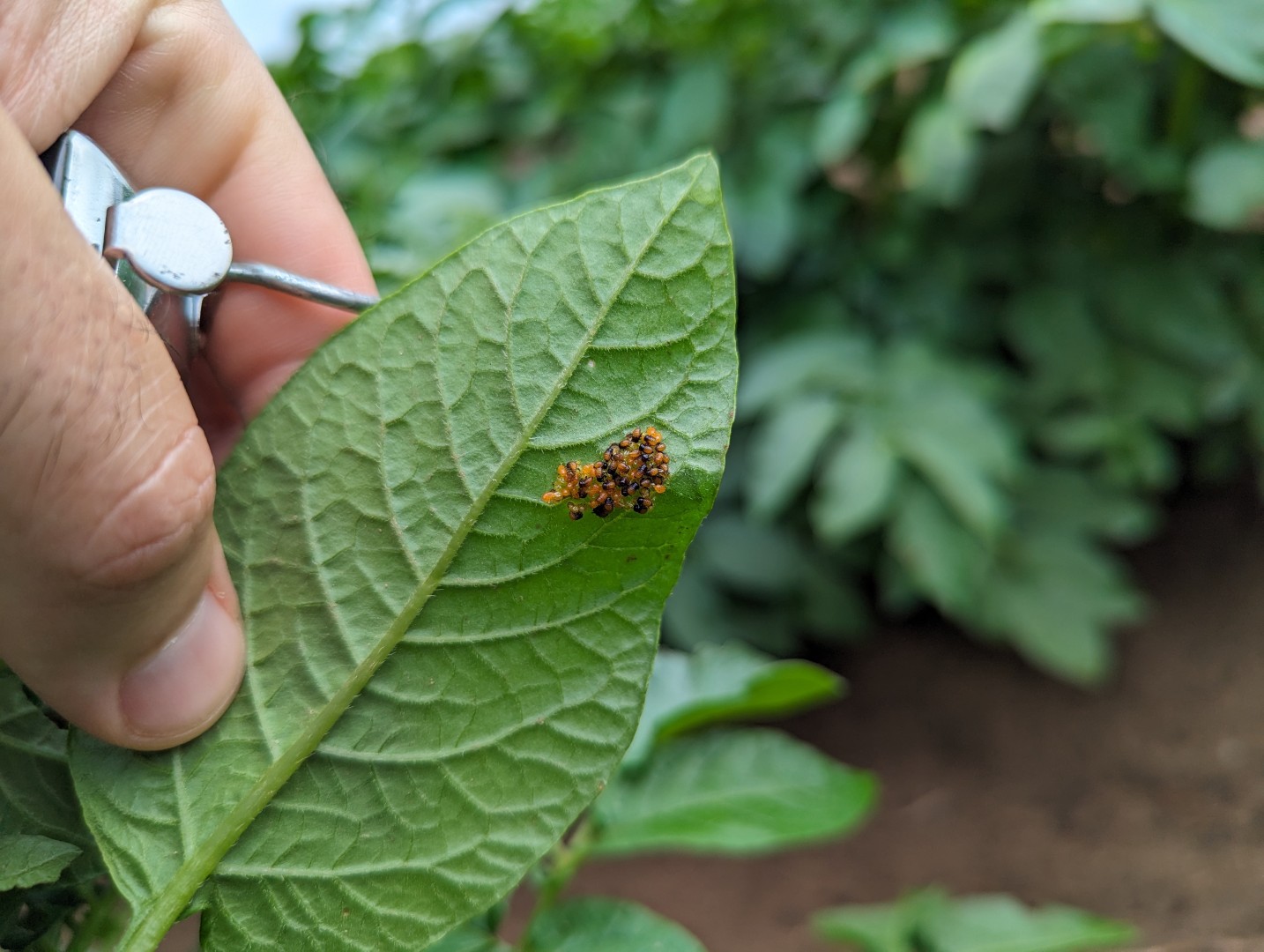
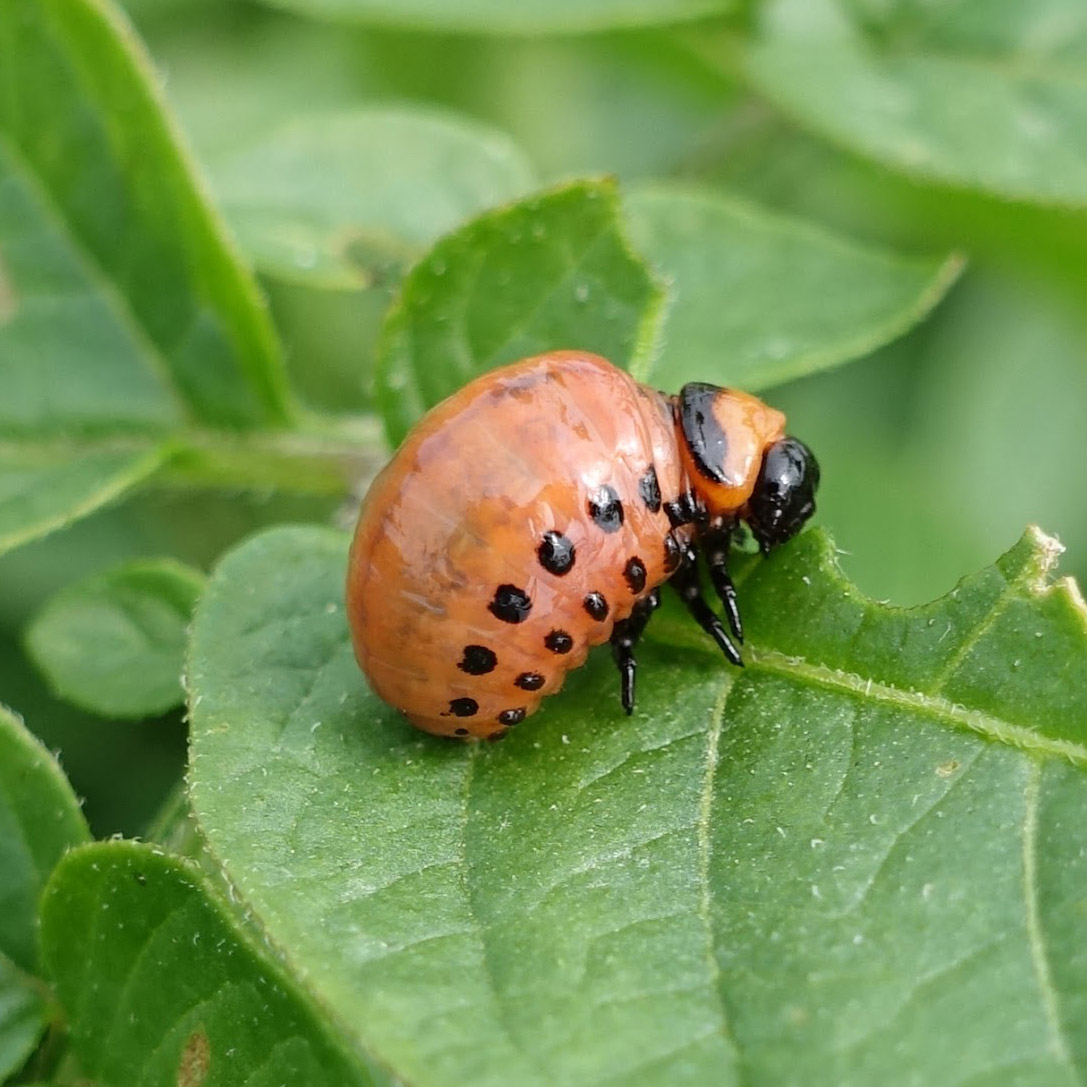
Larvae hatch from the eggs in 4-9 days depending upon ambient air temperature. The larvae will molt three successive times before pupating. Each immature life stage (stadium) between molts is called an instar, totaling 4 instars. First instar larvae are blackish-brown in color and very small, approximately the size of a pinhead. Once hatched first instar larvae prefer to feed upon newly expanded foliage at the crown of the plant. Because of their small size feeding damage is minimal. Second instar larvae assume a deep crimson coloring, leaf consumption increases two-fold from first instars. Third and fourth instars have bright red abdomens with black head capsules and legs. A line of black spots line the sides of these instars. The fourth instar is formidable, often larger than a pea (~10 mm). The last two larval instars consume increasingly more foliate and result in the majority of economic damage to solanaceous crops. After passing through four instars over 2-3 weeks, larvae return to the soil to pupate. Within 10-14 days the second generation of adult beetles emerge. At an optimal temperature of 83°F CPB can transition from egg to adult in 21 days.
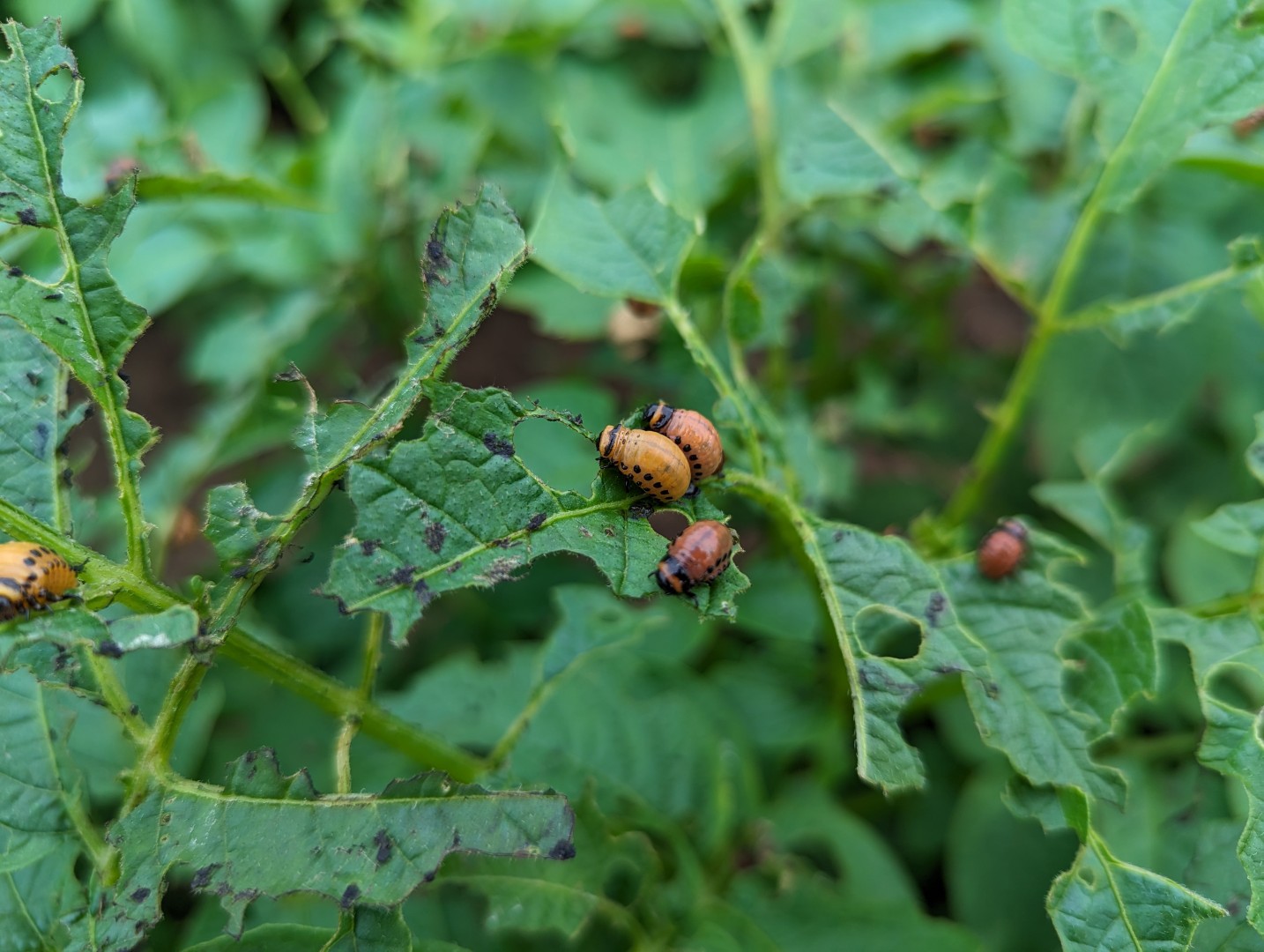
Second generation adults normally appear in mid-July and may cause severe defoliation of the crop. Generally, second generation adults will produce another generation of larvae. Under normal conditions, these adults may produce only a partial second generation and then seek overwintering sites as the crop begins to senesce. Typically there are two discrete generations of beetles per year in South-Central Wisconsin and only a single generation in Northern Wisconsin.
CPB overwinter as adults in Wisconsin. Typically overwintering adults will burrow 10-30 cm into the soil, often choosing protected areas near trees or in grassy edges surrounding gardens or fields. Adults emerge in the spring, at about the time potato breaks ground. Early season infestation is also a critical period for transplanted eggplant as CPB can significantly defoliate young plants in days. Overwintered adults often colonize crops first along field edges. Border planted crops are often the first places to begin scouting for beetle infestations.
Damage
Both adults and larvae are voracious herbivores. Typically young larvae begin feeding on newly expanding foliage at the top of the plant. Though defoliation may seem extensive on young plants, this early feeding damage on newer leaves is not damaging to yield at harvest. As larvae mature they typically feed in groups first defoliating whole leaves then ultimately the entire plant. The third and fourth instars do the majority of feeding among all stadia. Larvae will on average consume 40 cm2 of potato tissue while adults will consume an additional 9.65 cm2.
Management
Scouting
Begin checking for CPB adults in early May after potato plants have emerged. Early detection of infestation is especially critical in newly transplanted, susceptible eggplant crops. Visual search patterns for CPB should be twofold early in the growing season. First, quickly scan plants and surrounding soil for the presence of live adults. Often adult beetles will drop from small plants to the soil as a defensive tactic, typically observing the area surrounding plants will help for early detection. Second, carefully examine lower leaf surfaces of plants for clusters of bright yellow-orange, waxy eggs. Note the number of adults and egg masses in for a given number of plants. This number will help to track the overall trajectory of pest infestation. Additionally, focus early season scouting on border rows that are adjacent to either previous solanaceous crops or unmanaged non-crop areas. These have the greatest probability for early infestation by adult CPB and greater densities egg masses.
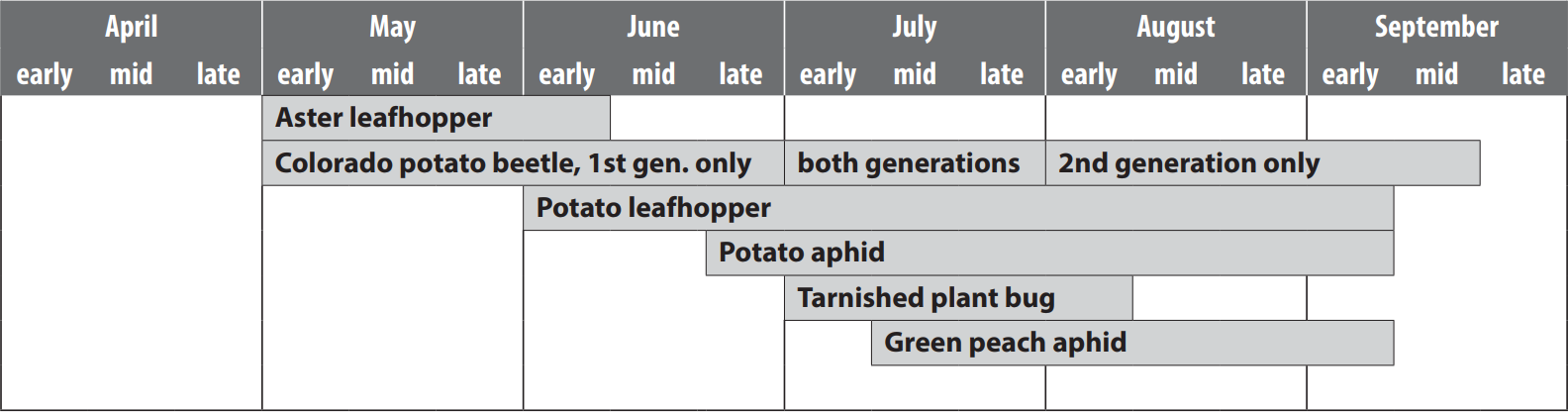
After the first detection of either adults or egg masses begin strategically looking for small larvae (1st and 2nd instars) on the crop. To do this effectively, focus the majority of scouting for larvae on the tops of plants. In potato, small larvae will typically move to the newly expanding foliage at the crown of the plant. Larvae are very small at this stage and may not be directly apparent unless the emerging foliage is carefully parted. First instar larvae may be easily confused with dirt or debris until closer inspection. This task is even more challenging on some varieties of eggplant due to the darker colored foliage and stems. Careful inspection of the crop at this stage greatly enhances your chances for season long management of CPB. As the larvae grow larger general defoliation will first be apparent as small holes forming on upper leaves. Potato beetle larvae are typically very immobile and should be in close proximity to feeding damage.
Secondary pests such as the highly mobile potato flea beetle (Epitrix cucumeris) may also cause feeding damage to both potato and eggplant foliage. If potato beetle larvae are not present when scouting foliage there is a good chance the feeding may be caused by potato flea beetle adults. Flea beetle damage often appears in a shotgun pattern (several small holes in leaves) that differs from skeletonizing feeding patterns of CPB. Once CPB are large larvae (3rd and 4th instars) defoliation will be much more apparent. Entire leaves will be stripped of all foliage throughout the plant. CPB populations often become asynchronous as the season progresses. It is very important to continue searching for all life stages throughout the season. Careful and deliberate scouting season-long will go a long way to gain the upper hand on CPB.
Degree-day model
Most chemical pest management practices are timed to calendar dates. But insect development is directly related to temperature: cool weather slows growth, warm weather accelerates it. So unless the weather of a given year is that of the “normal” year, recommended treatment dates may not coincide with the most vulnerable life stage of an insect pest. Using a system based on the daily high and low temperatures instead of calendar dates will help you better anticipate pest outbreaks. This system converts daily average temperatures into degree days. A degree day is a unit of measure for each degree above a base temperature (52°F for CPB). To use this approach, begin keeping track of the temperature when you find the first egg mass (or use an online degree-day calculator like AgWeather or USPest.org). Keep a running total of the numbers of degree days to chart insect development. Table 1 identifies the number of degree days needed for each stage of Colorado potato beetle development.
Table 1. Rate of beetle development using degree days
Model: Base temperature: 52°F, Upper threshold: 86°F, Biofix: 1st egg mass detection
| Life stage | Degree days | Accumulated degree days |
|---|---|---|
| Egg | 120 | 120 |
| First instar | 65 | 185 |
| Second instar | 55 | 240 |
| Third instar | 60 | 300 |
| Fourth instar | 100 | 400 |
| Pupae | 275 | 675 |
Non-chemical control strategies
Crop tolerance
Potato plants can tolerate varying levels of defoliation before they will suffer yield losses. The level of tolerance depends on the plant’s growth stage. Flowering plants can tolerate the least defoliation, only 5-10% of total leaf area. Post-flower potato is able to withstand a slightly greater amount of defoliation but since this is a critical point for tuber formation and bulking growers should limit the amount of feeding done by CPB. Growth stages ahead and behind these two points are more tolerant of defoliation. Late season feeding on potato that is beginning to senesce is the least critical period for yield loss. Eggplant is far less tolerant of defoliation, growers should be mindful of managing infestations carefully to limit complete crop loss to CPB. It should be noted that estimation of crop defoliation is an exceptionally challenging task for most growers. Defoliation estimates are typically 10-20% higher than true leaf area eaten by CPB. To ensure a good representation of potential crop damage integrates both insect counts and defoliation for an estimate of current and future damage to the crop.
Host plant resistance
The NewLeaf potato was a genetically-modified potato variety that was introduced to the market in 1995 by Monsanto. It contained genes from Bacillus thuringiensis (Bt) that coded for the Cry3A protein, and made the potato foliage toxic to Colorado potato beetles, reducing the need for chemical control strategies. Later, NewLeaf Plus and NewLeaf Y cultivars were introduced that added resistance to potato leafroll virus and potato virus Y. However, negative public perceptions of GM foods led major fast-food companies like McDonalds to discontinue the use of the potato, and it was withdrawn from the market in 2001.
More recent potato breeding efforts have focused on using traditional non-GM strategies to introduce traits crossed from wild potato varieties to increase the amount of a protein called Leptine in potato foliage, which discourages feeding by Colorado potato beetle.
Biological control
Exceptionally high fecundity of CPB makes them very difficult to manage with natural enemy pressure alone. In the diverse polyculture of the home gardens and fresh market operations this strategy may be more effective. Beauveria bassiana is a natural, soil-dwelling pathogenic fungus known to infect a wide range of insects. It is available from many garden stores as a formulated compound that can easily be applied as a foliar spray. In some cases B. bassiana has been shown to reduce CPB populations up to up to 75%.
Several predaceous bugs, beetles, two species of tachinid flies, and generalist spider predators have been shown to feed on CPB. A small parasitic wasp (Edovum puttleri) has been documented to parasitize 71-91% of CPB eggs in eggplant, effectively killing the majority of eggs contacted. Though, some of these natural enemies show promise in small-scale studies, few have demonstrated success in large-scale field situations.
Cultural and physical control
A variety of cultural control methods are available to reduce CPB. In home garden, the most effective way to manage beetles is by hand. When scouting plants, gardeners can easily crush egg masses and groups of small larvae with their fingers. Hand picking large larvae and adult CPB into a cup of soapy water is a very easy method to reduce older life stages. Be sure to wash your hands before touching your eyes or mouth after hand picking CPB because the insects contain a chemical that is often irritable to sensitive skin. Hand picking beetles is very effective but growers must be persistent to keep populations under control. Be sure to check plants every few days until the peak colonization period has ended.
Hand picking is a challenge in many larger fresh-market gardens, so other strategies are needed. Crop rotations that avoid solanaceous crops such as eggplant or potato will substantially reduce the beetle population. This practice must be incorporated with non-crop sanitation of other weedy solanaceous hosts for CPB. Another effective management strategy is to plant extra rows of potatoes adjacent to overwintering sites to aggregate beetles in the spring and autumn. Beetles will are attracted to these “trap” crops and can be removed using propane flamers, vacuum suction, flail chopping or other physical controls. Spring trap crops must be planted a full two weeks prior to the primary crop for greatest efficacy, relying upon early emerging potato being more attractive to colonizing adults.
Physical barriers, such as floating row covers and plastic-lined trenches (Fig. 3, 4), can be used to prevent adult beetles from finding plants and laying eggs. Row covers should be in place before plants emerge and should remain there through the peak colonization period (mid-June). Plastic-lined trenches should be situated between fields and overwintering sites before plants emerge. Dig trenches 50 cm deep and 30 cm wide, line them with plastic, and allow plastic to become covered with a thin layer of dust from field soil. Beetles will become trapped in the trench and will be unable to climb out.
Chemical control
Colorado potato beetle has a long history of insecticide resistance and this remains a major pest of commercial potato production. Wisconsin beetle populations are still susceptible to many insecticides, but repeated applications and overuse of similar insecticide classes will lead to insecticide resistance issues.
Selected products registered in Wisconsin for Colorado potato beetle management
| Product | Vendor | Group | Active Ingredient | Adjuvant |
|---|---|---|---|---|
| Platinum 75SG | Syngenta | 4A | thiamethoxam | None (systemic) |
| Admire Pro 4.6SC | Bayer | 4A | imidacloprid | None (systemic) |
| Scorpion 35SL | Gowan | 4A | dinotefuran | NIS |
| Delegate 25WG | Corteva | 5 | spinetoram | NIS |
| Falcondor 2SC | Atticus | 5 | spinosad | NIS |
| Agri-Mek 0.7SC | Syngenta | 6 | abamectin | NIS |
| Enterik 0.7SC | Atticus | 6 | abamectin | NIS |
| Rimon 0.83EC | UPL | 15 | novaluron | NIS |
| Torac 15EC | Nichino | 21A | tolfenpyrad | PBO + NIS |
| Sedaire 1.25EC | Atticus | 22A | indoxacarb | PBO + NIS |
| Contigo 600SC | Atticus | 28 | chlorantraniliprole | MSO |
| Coragen eVo 5SC | FMC | 28 | chlorantraniliprole | MSO |
| Exirel 0.83EC | FMC | 28 | cyantraniliprole | MSO |
| Harvanta 50SL | SummitAgro | 28 | cyclaniliprole | MSO |
| Verimark 1.67SC | FMC | 28 | cyantraniliprole | MSO |
| Minecto Pro 1.37SC | Syngenta | 28 6 | cyantraniliprole abamectin | MSO |
| Elevest 2.22SC | FMC | 3A 28 | bifenthrin chlorantraniliprole | MSO |
| Zivalgo 3.33SC | Syngenta | 30 | isocycloseram | NIS |
| Calantha 80SL | Greenlight | 35 | ledprona | NIS |
Refer to our article on Colorado Potato Beetle Management for detailed chemical control strategies.
Refer to the UW-Extension publication Commercial Vegetable Production in Wisconsin (A3422) for an updated list of registered insecticides and management recommendations.
Systemic applications
Most commercial potato growers continue to use an at-plant systemic insecticide applied to the seed piece, in-furrow, or as a granule incorporated into the starter fertilizer. Effective products include Platinum (thiamethoxam), Admire Pro (imidacloprid), and Verimark (cyantraniliprole).
First-generation foliar applications
For most CPB chemical management tools, timing application occurs with the appearance of first instar larvae in the field. Early instar larvae are the most susceptible life stage for chemical management, and applications should be timed with the midpoint of egg hatch. The first application should be followed up in 7-10 days later with a second application of the same compound depending on the formulation and label restrictions.
Initial applications of ledprona (Calantha) and novaluron (Rimon) should be applied when 10% egg hatch has occurred. Foliar applications of compounds including, tolfenpyrad (Torac), spinosad (Falcondor, Blackhawk, generics) spinetoram (Radiant, Delegate), or abamectin (Agri-Mek, generics) should be applied when nearly 50% of egg masses have hatched, and a only a few 2nd instar larvae are present from the earliest hatched egg masses. These 1st generation larvicides often require 2-3 subsequent re-applications spaced on a 7-10 day interval to achieve sufficient control.
Second-generation foliar applications
Second-generation applications should be initiated after adult emergence and egg laying, and when adult and larval feeding pressure increases to the extent that defoliation begins increasing towards the action threshold. Effective control of first-generation beetles will result in lower second-generation populations.
Insecticide resistance management
Colorado potato beetle has a long history of developing resistance to insecticides used to control it. As new insecticide modes of action are brought to market, it is important to preserve their efficacy by following resistance management practices including following pesticide label instructions including application rates and season total maxima, and by rotating to different modes of action across generations (including across years). CPB do not move far from overwintering habitats (typically field edges), moving less than a mile in search of potato crops to colonize. A such, populations can increase their resistance to insecticides year after year if not managed responsibly.
Insecticide modes of action are classified into groups by the Insecticide Resistance Action Committee (IRAC). Care should be taken not to use the same mode of action across two subsequent generations, such as using a diamide (group 28) at-plant (exposing the first generation), and again as a foliar against the second generation. Second generation adults disperse to overwintering habitats, becoming the first generation in the following season colonizing nearby fields, so rotation strategies should also consider prior-year insecticide applications for resistance management.
Area-wide management
Two new strategies are emerging for managing Colorado potato beetle: mode of action coordination, and long-distance rotation.
- Mode of action coordination means all (or a majority) of growers in an area coordinate their insecticide rotations such that beetles cannot “escape” from one mode of action by moving to a nearby field where a different insecticide has been applied to which they are more resistant. Challenges include organization and coordination of multiple growers and economic pressures.
- Long-distance rotation seeks to reduce beetle populations by rotating an area’s entire potato acreage far enough away that emerging overwintered beetles from the previous year cannot find any fields to colonize. This is difficult logistically, but can result in substantially reduced beetle populations.
Last updated: