Cabbage Maggot
Order Diptera (flies)
Family Anthomyiidae (root-maggot flies)
Species Delia radicum
Description
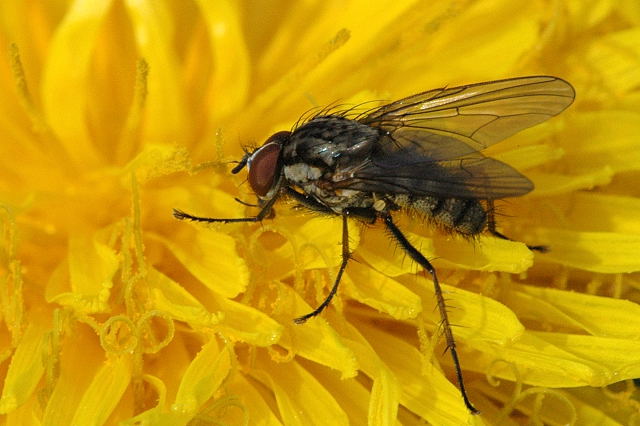
Photo: James Lindsey
Cabbage maggots are early season pests that feed on the roots and lower stems of all cruciferous crops and weeds. Wounds produced by this feeding can create entry points for several cole crop diseases. Early season transplants and spring roots crops are damaged most severely.
The adult cabbage maggot is an ash gray, bristly fly that resembles a housefly but is half as long with black stripes on its thorax. The larvae are only 1/3-inch long, white and have no legs and a body that tapers toward the head. Cabbage maggots appear similar to seed corn maggots, but cabbage maggot prefers to feed on the roots of cole crops while seed corn maggot prefers to feed on seeds and seedlings of corn and cucurbits.
Life cycle
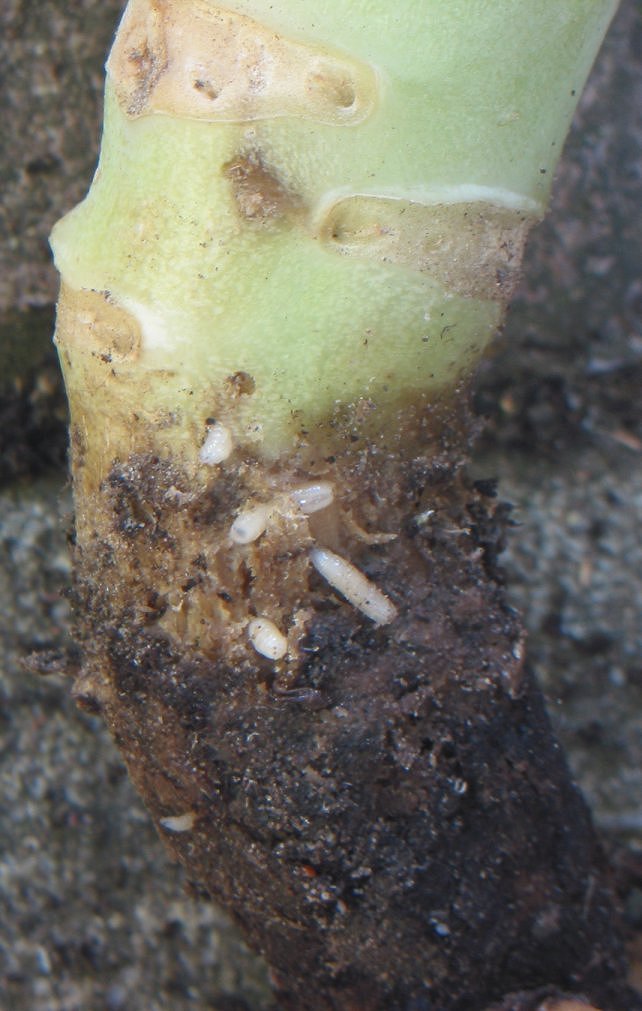
Cabbage maggots overwinter as pupae in the upper few inches of the soil. Overwintering adults emerge in mid-May, about the same time as yellow rocket and forsythia are in bloom. Adults are attracted to freshly-tilled fields with decaying organic matter. Eggs are laid on the soil near the base of cole crops. Eggs hatch in 2-7 days, and the larvae immediately begin feeding on the roots of the plant. Feeding continues for 3-4 weeks before the larvae pupate in the soil. The second generation of adults emerges in late June and lays eggs, which will develop into overwintering pupae by fall.
Symptoms and effects
Cabbage maggots feed both internally and on the surface of roots. Their tunneling provides a point of entry into the plant for pathogens such as soft rot bacteria and the blackleg fungus. Maggots can be especially damaging to seedlings, injuring the growing point of the root, and stunting plant growth. Affected seedlings and young transplants may become off-color or wilt during hot weather. Cabbage maggots thrive in wet, cool conditions, and injury to crops is most likely during first and third generations.
Management
Scouting
Fly emergence can be forecasted with degree day models, which can be counted after the ground has thawed. At a base temperature of 43°F, the first generation appears after 300 degree days have accumulated. The second and third generations will appear after 1476 and 2652 degree days have accumulated. Fly populations can also be monitored with yellow plastic bowls filled with soapy water. Bowls can be placed at 100-foot intervals along field edges and inspected every 4-6 days to determine if fly populations are building or dropping off.

Visit the Vegetable Disease and Insect Forecasting Network (VDIFN) website to view the cabbage maggot degree-day model and predicted crop risk map.
Cultural control
Cabbage maggot treatment is primarily preventative. Plants that already have eggs on them are likely to have damage from infestations. If possible, time planting dates to avoid peak fly emergence. Plantings after mid-June generally suffer less damage than early plantings. To avoid damage from this pest, till in cover crops 2-3 weeks before seeding or transplanting, and plant when soil temperatures are adequate (e.g. > 50 F) for quick emergence. Transplants should be planted one week before peak fly emergence. Floating row covers are also effective in protecting plants during flight periods. Do not plant cole crops in fields where animal manure has been freshly applied. Diatomaceous earth, parasitic nematodes, and predaceous ground beetles may also help reduce damaging populations. Crop residues should be worked into the soil immediately after harvest to reduce sites where maggots can overwinter.
Chemical control
Insecticides at planting time are recommended in areas that have historically had problems with cabbage maggots. Direct applications at the base of the plants can avoid disrupting soil-inhabiting beneficial insects. No insecticides are effective after the onset of a cabbage maggot outbreak.
Refer to the UW-Extension publication Commercial Vegetable Production in Wisconsin (A3422) for an updated list of registered insecticides and management recommendations.
Last updated: