Population Monitoring
Monitor pest populations to know when to act to protect your crop from insect pests. From being informed about when particular pests are in flight, to setting traps to determine if a pest is present in your field, there are a variety of population monitoring tools to help reduce unnecessary treatments.
Scouting
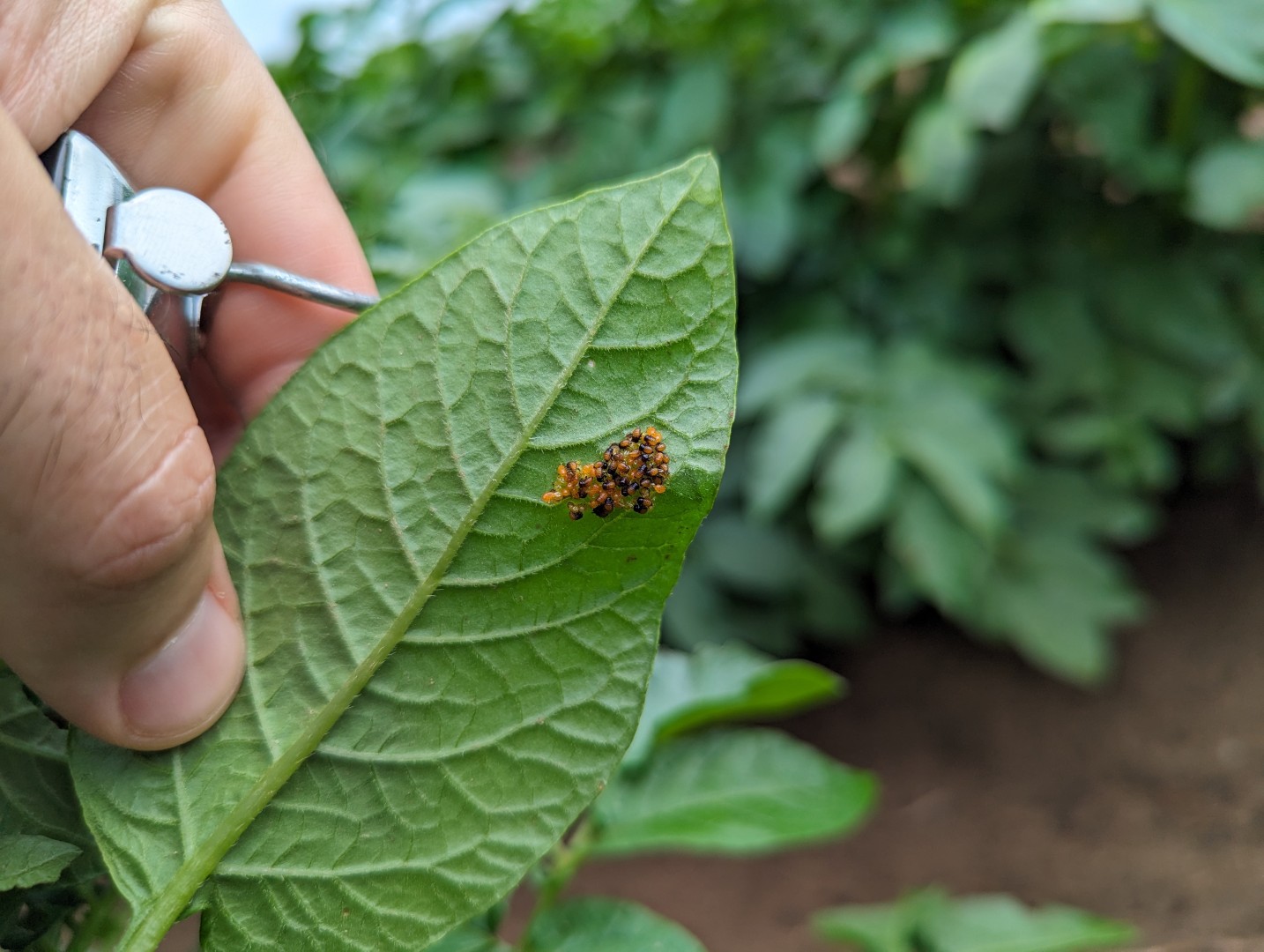
Scouting allows you to determine if pests are present, what life stage they are in, and how the population is changing over time. A variety of scouting techniques have been developed to help a scouter key in on where a particular insect can be found at particular times in particular crops. The most basic and reliable scouting method is to visit the field and look for pest insect by hand by visually inspecting the crop or using a sweep net to collect and count fast-moving or flying insects. By characterizing the number and life stages of a pest insect present in the field, appropriate interventions such as chemical sprays can be targeted to protect the crop.
Predictive modeling
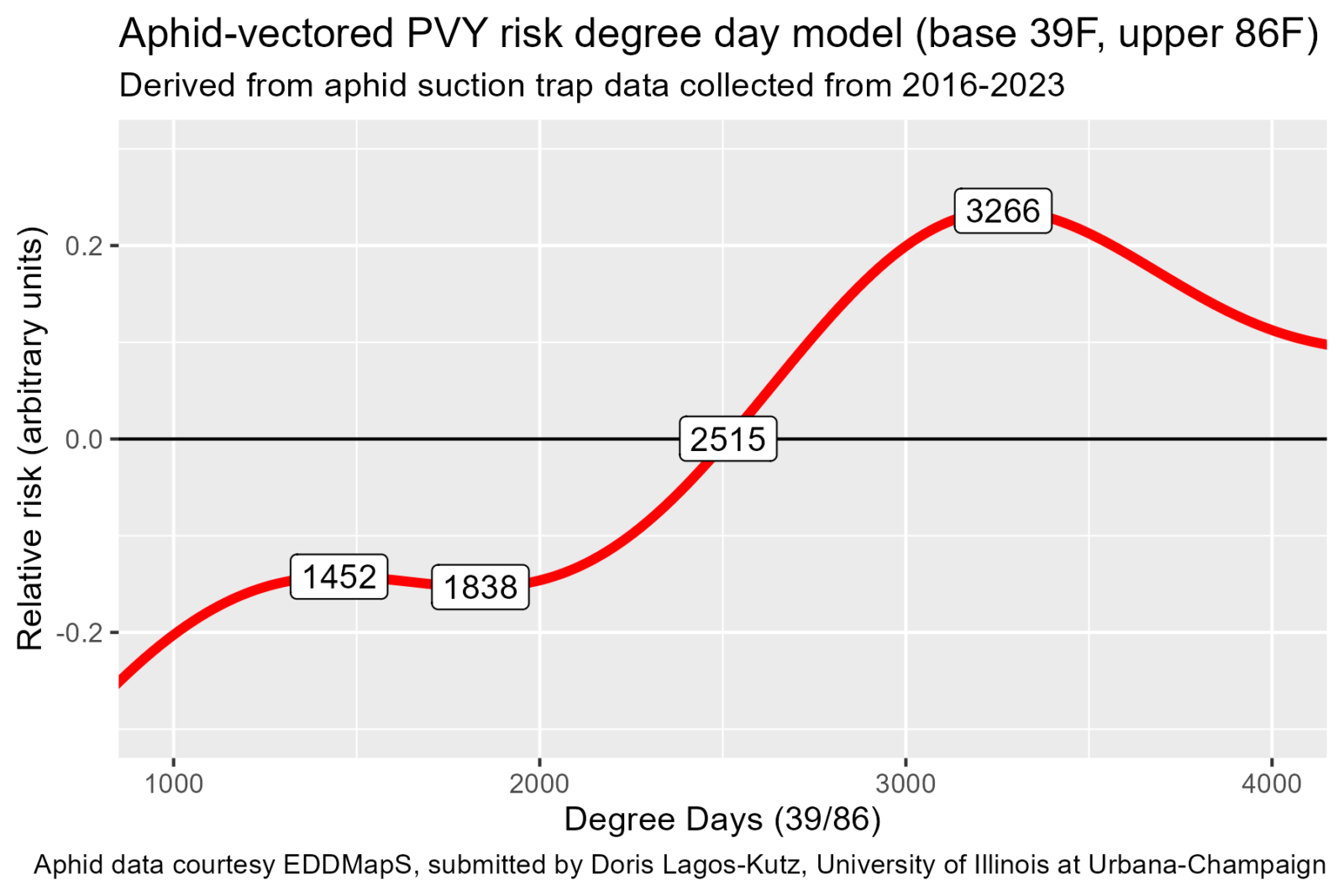
Predictive models like degree-day models are a way of using daily temperature highs and lows to determine where in an insect’s lifecycle it is likely to be at a given time. For instance, when 212 degree days have accumulated since January 1st, the first generation of European corn borer larvae is likely to hatch. Predictive models help anticipate pest arrivals and crop risks, but are not a complete substitute for on-the-ground scouting prior to taking management actions.
Automated/smart traps
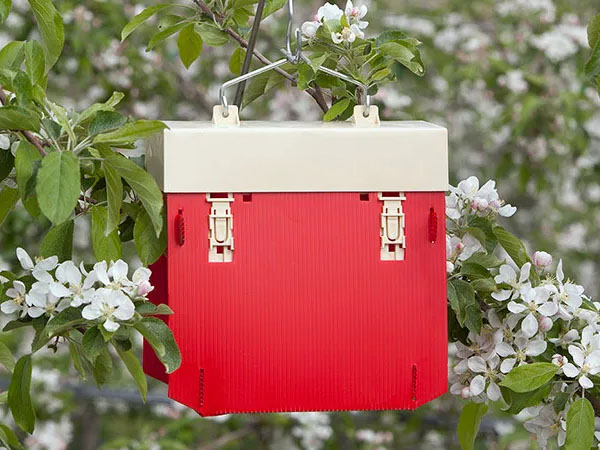
This is an emerging technology, also known by other terms such as automatic insect camera traps, digital pest monitoring stations, or AI/computer vision traps. They may combine blacklight or pheromone traps with digital imaging systems that can characterize the number and type of insect attracted to the trap, providing real-time information on pest populations without the manual labor of visiting each trap and counting the insects by hand. Many companies are currently commercializing this technology.
Acoustic monitoring
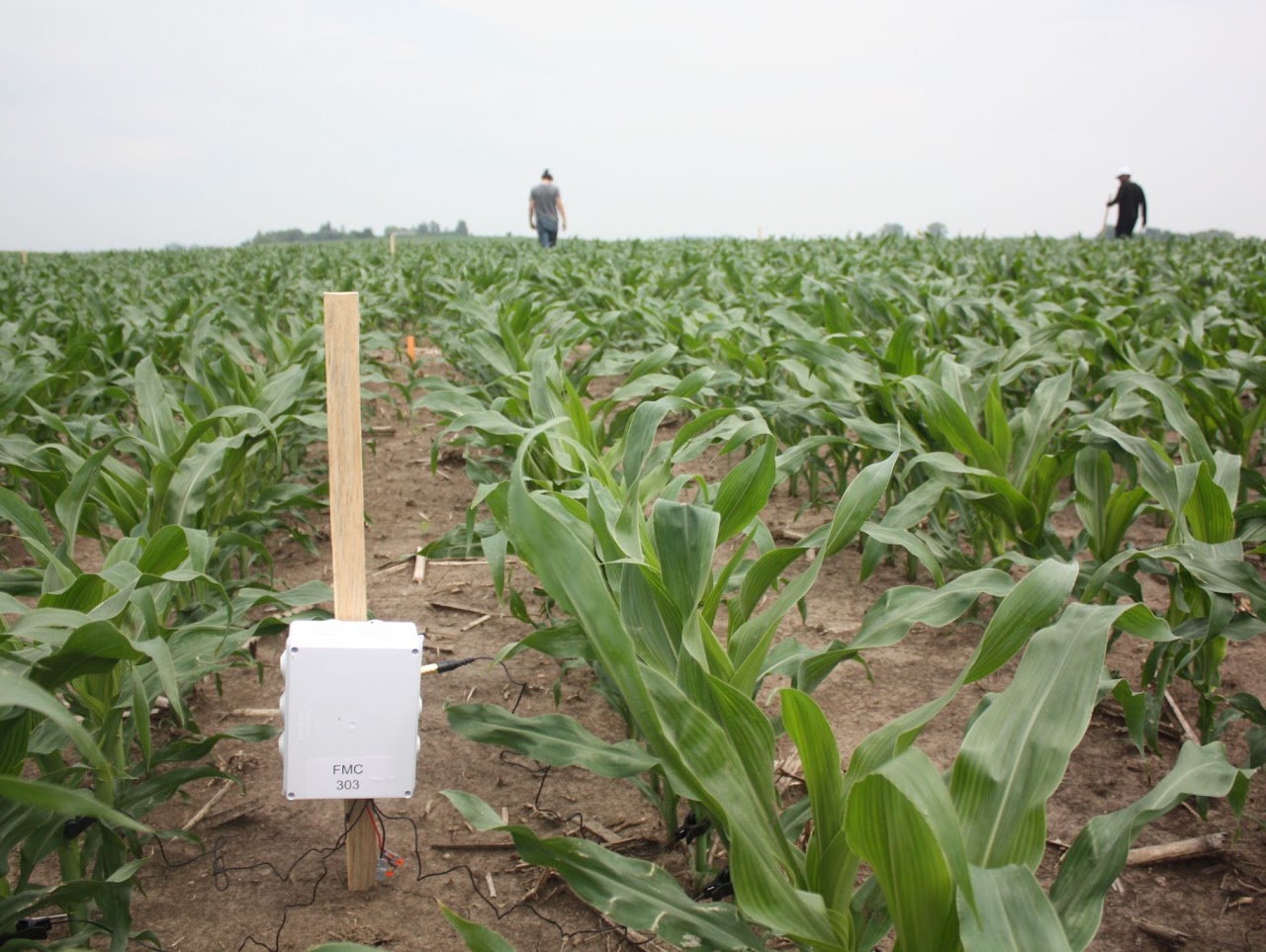
Acoustic monitoring involves using a microphone or transducer to detect the characteristic sounds of insects, either their wings beating, their chewing behavior, or some other detectable signal that can be linked to an insect. Applications include detecting stored grain pests in granaries, detecting underground rootworm feeding on corn, and more.
Aerial/drone monitoring
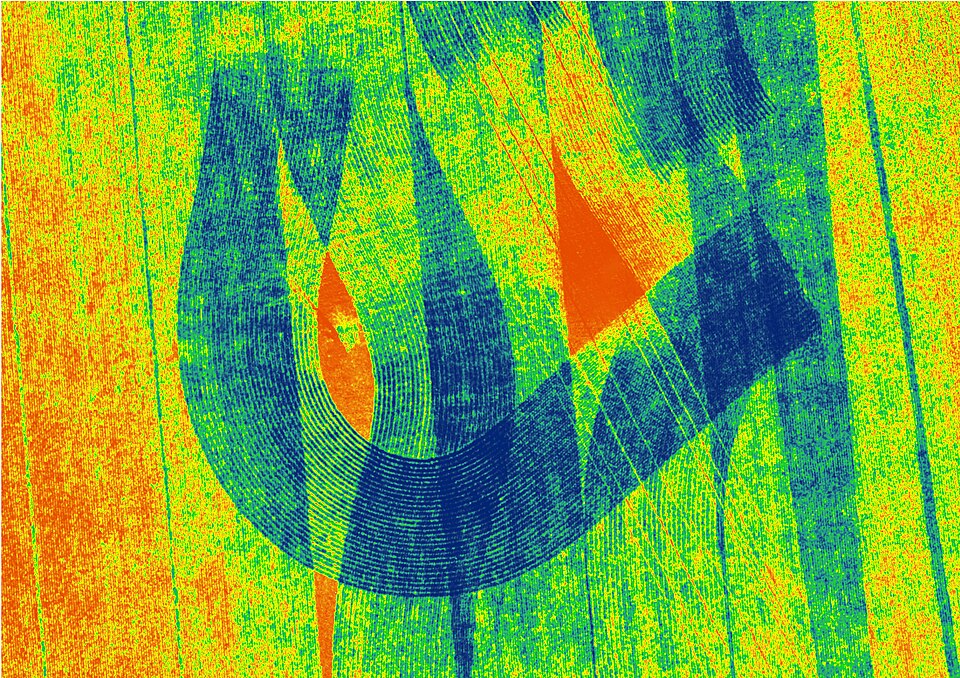
Drone or airplane overflights of fields can be used to monitor plant health or disease pressure using hyperspectral imaging. Some insect pests may also be detectable in aerial imagery, but due to the small size of most insect pests this technology is still in its infancy.
Sticky traps
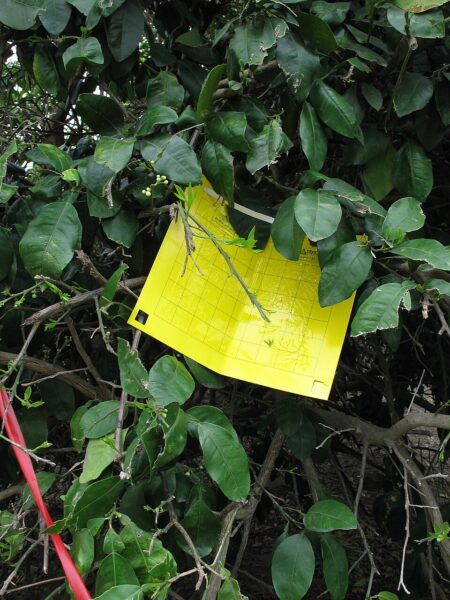
Yellow sticky traps or cards can be used both for population monitoring and pest management. If simply placed and left, small flying/jumping pests like fungus gnats, whiteflies, leafhoppers, or flea beetles can be at least partially controlled. To use these cards for population monitoring, place a card on a stake near the target crop and leave deployed for a set period of time (one day or week). Collect the card, and determine the number of target pests caught during that period by counting either all insects on the card, or using the marked grid cells on the trap to count a subsample of the card and extrapolate the amount to the full card area.
Pan traps
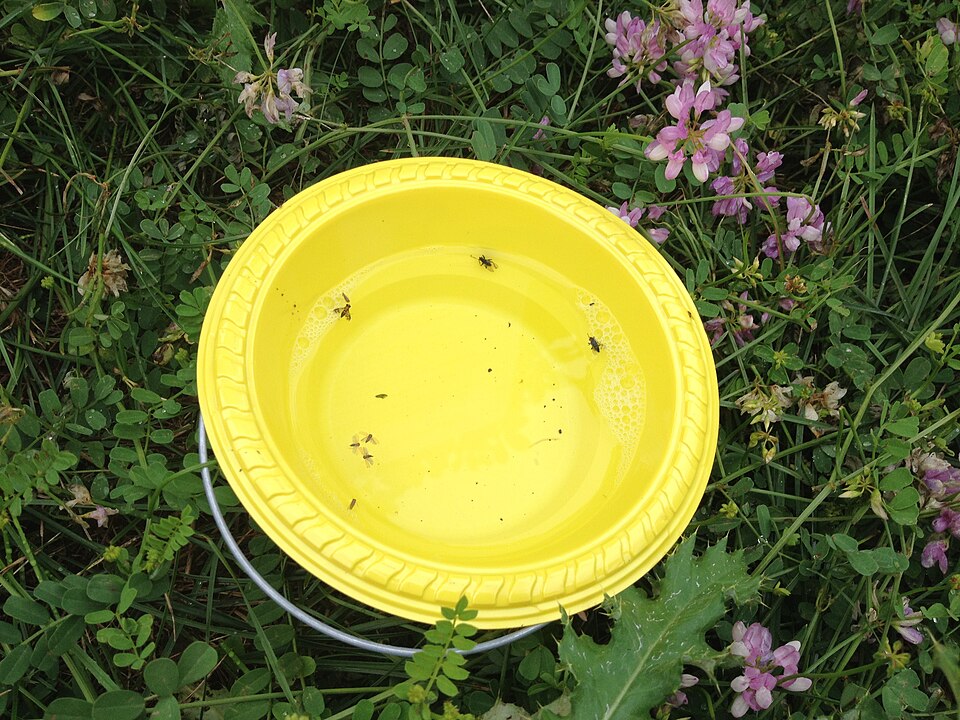
Pan traps are shallow, colored containers filled with soapy water used by scientists to catch and monitor flying pollinating insects like bees, wasps, flies, and aphids. They mimic flowers using bright UV-reflective colors (white, yellow, blue, pink) to trick insects into landing, where they break the surface tension and sink. Trap catch should be collected on a fixed schedule, and the number of target insects counted and recorded. Be aware that pollinators and other beneficial insects may end up in pan traps, so other options may be preferable, particularly if there are species of concern such as the Rusty patched bumble bee in the area.
Suction traps
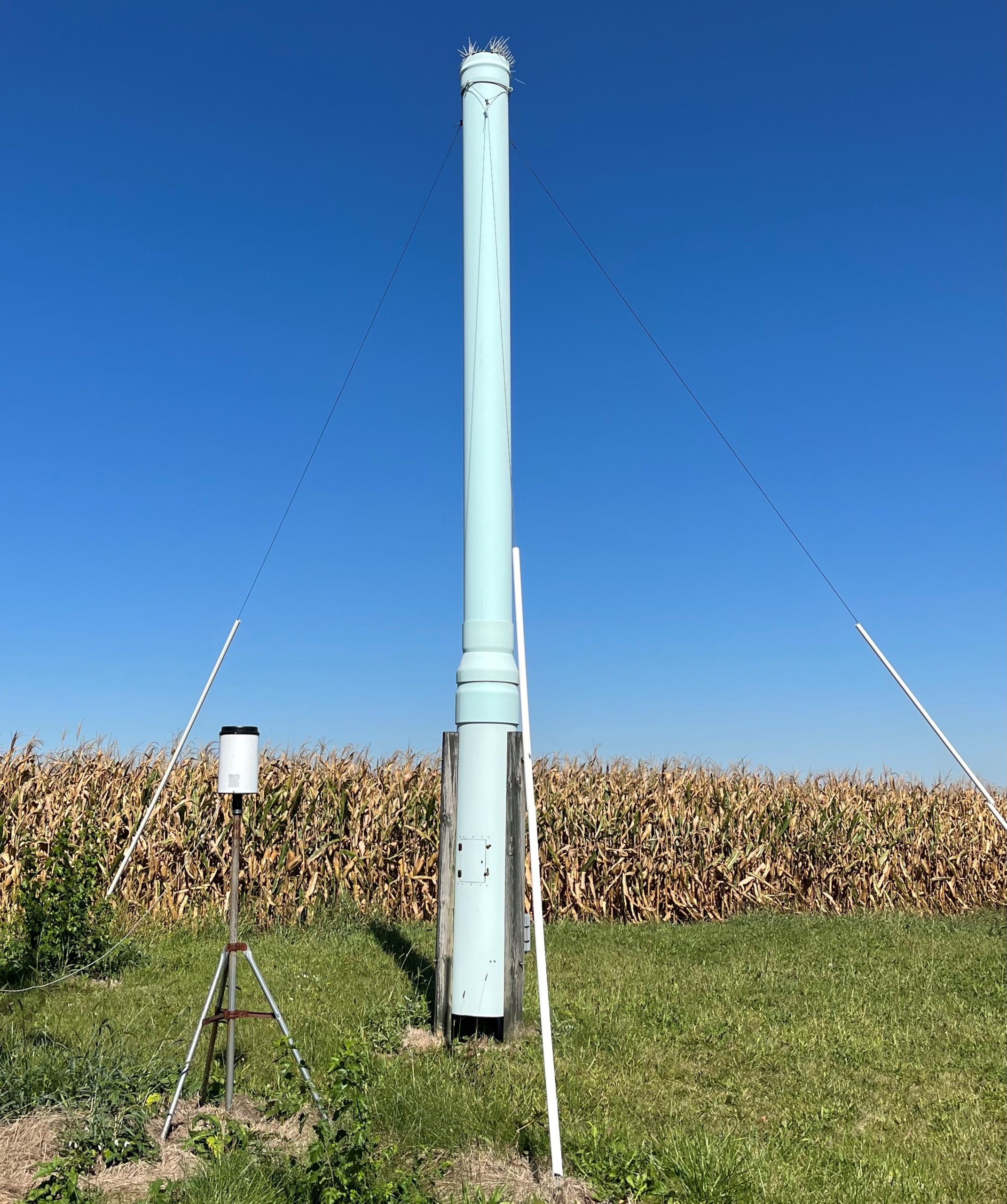
While most other forms of trapping are passive, relying on the insect to either be attracted to the trap or to alight on it incidentally, suction traps contain a powered fan that draws air in and deposits any collected insects into a cup of soapy water or glycerol. Samples are changed out regularly, and captured insects are identified and counted. One example of this methodology is the Midwest Suction Trap Network, which uses a network of large vertical PVC pipes fitted with fans to capture flying aphids, providing valuable data used for phenology modeling and pest management.
Pheromone trapping
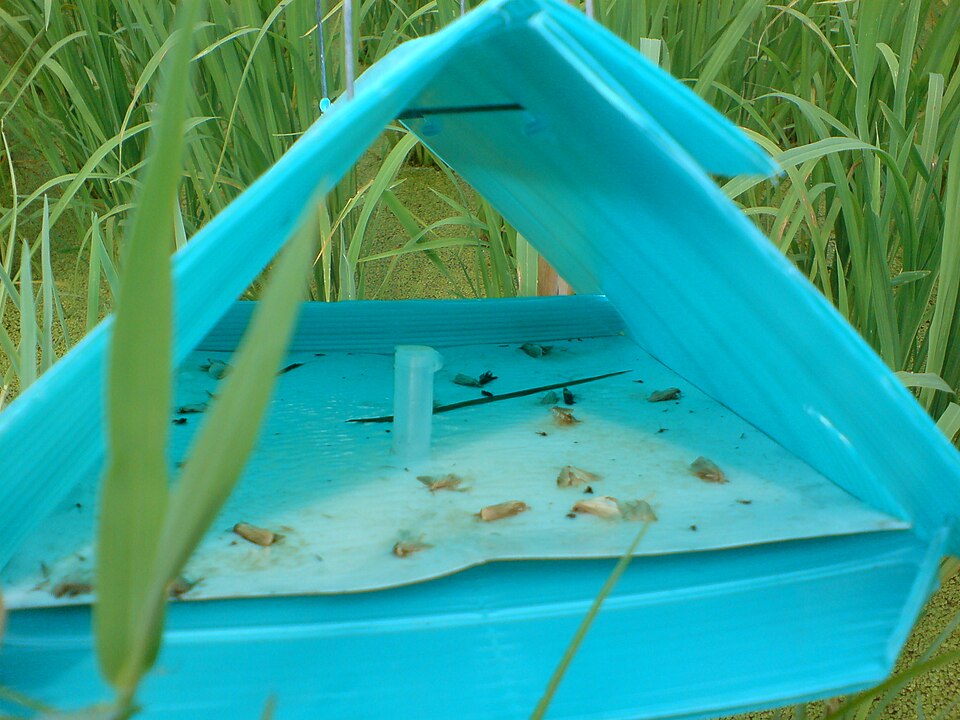
Insects secrete pheromones to alert other insects about information such as the sex of the insect, trail location, alarm, and grouping. Synthetically produced pheromones mimic the chemicals produced by insects and are used to lure specific insect species to specially-designed traps. At this time, over 60 different pheromones are commercially available to aid in pest monitoring. The most common vegetable pest monitored with a pheromone trap is the corn earworm. Diamondback moths can be monitored with pheromones as easily as the corn earworm, however most growers haven’t begun to utilize this very useful monitoring tool.
Trapping will take time and additional knowledge to implement. You must learn which type of trap to use, where and when to place the trap, which lure to use, how often to check the trap, and what trap catches mean. However, trapping will save you money in the long run by indicating whether you actually have an insect infestation and whether it is severe enough to require treatment. Trapping will also help you time your treatment efforts to the most susceptible life stage of the pest. By trapping the adult insects, you will realize you have a pest problem long before the damaging larvae are present.
Trap type: It is important to use the appropriate lure specific to the pest you want to monitor as well as the correct trap. Pheromone traps may be sticky traps such as the delta or winged traps used to monitor gypsy moth and other tree or orchard pests. Some insects such as Japanese beetles and corn earworm moths require specifically-designed traps. For example, corn earworm moths must be trapped in a specialized wire mesh trap called a Hartstack trap.
Timing: Traps should be in place at least 2 weeks before the earliest known emergence of the insect in your area. Extension specialists can help you determine when to set out traps. Check traps at least twice a week. Once insects appear in the trap, monitor at least every other day so you don’t miss population trends and peak emergences. Record the number of moths caught at each visit so you can compare trends at a later date if needed.
Placement: Trap location is important. Ideally, every susceptible field should have a pheromone trap located in or near it. For example, if you are trapping corn earworm moths, you should have an earworm trap in every silking sweet corn field. Traps should be placed level with the crop canopy “upwind” at the field edge so that the pheromone can be dispersed through the field.
Lure handling: Lures, the plastic or rubber strips impregnated with the pheromone, should be kept in the freezer until ready to use. Do not expose lures to heat. Replace according to package directions. For example, earworm lures should be changed every 2 weeks. Because there will still be some pheromone left on the old lure, remove it from the field and dispose of it along with the packaging material for the new lure. Do not leave the used lure in the field as there is enough pheromone remaining to attract (and confuse) the moths.
Blacklight trapping
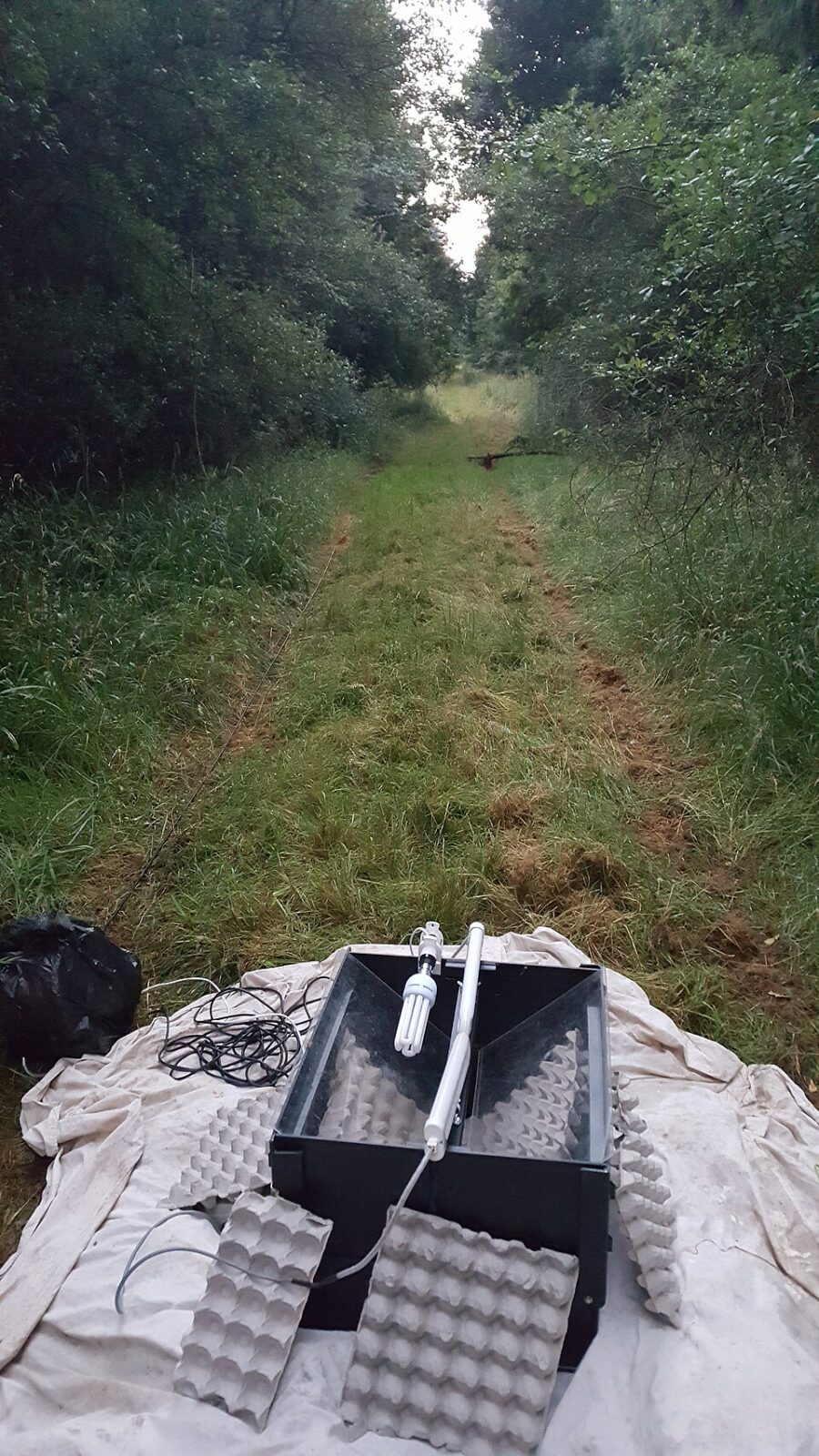
Blacklight traps will help you determine when nocturnal moths are flying as well as their relative abundance. This information allows pest managers to determine the timing of peak periods of activity and subsequently, pest management activities. Blacklight traps are useful for monitoring pest populations; they are not designed to reduce pest populations. It is not necessary to locate a blacklight trap on every farm. Regional trapping information is available in several printed and electronic newsletters produced by the WI-DATCP and University of Wisconsin-Extension.
Placement: Trap placement is important for assuring an accurate representation of the insects you are monitoring. For European corn borers, place traps in “action sites,” grassy areas adjacent to cornfields where the adult corn borer moths congregate. The light should be positioned 3 to 4 feet above the ground over grassy vegetation. The traps should be no more than 300 feet from corn. The farther away from cornfields the traps are placed, the fewer moths that will be caught, although the catches will still show population trends. Trap placement relative to wind direction is not important. Locate traps at least 200 feet away from other sources of light such as post lamps or heavily traveled roads. When placing traps, you may wish to consider the potential for vandalism. Blacklights, as well as 12-volt batteries, if used, are attractive to vandals.
Efficiency: Several variables affect moth catches in blacklight traps. Inclement weather, such as cold temperatures, high winds, and rain, will reduce the number of moths caught. Keep in mind that if weather conditions are interfering with moth catches in light traps, those same conditions may also be affecting mating and egg laying. When the moon is full or nearly full, trap catches may be reduced due to the high amount of background light.
Monitoring: Blacklight traps should be checked frequently—preferably every other day. Fresh specimens are much easier to identify as many of the identifying characteristics become obscure with age. If possible, check and empty traps prior to rain since water in the collection container will destroy the distinguishing characteristics on the wings. In general, moths smaller in size than the diamondback moth (wingspan less than 5/8 inch) and larger than hawk moths (wingspan greater than 3 inches) are not economically important and can be ignored when sorting through a trap catch. Placing a DDVP (dichlorvos) insecticide strip in the funnel portion of the collection container will kill the insects, making them easier to identify. To aid in moth identification, the UW-Extension IPM program has developed a color fact sheet entitled Identifying Blacklight Trap Catches in the Upper Midwest. It illustrates each of the economically important nocturnal moths and describes identifying characteristics.
Last updated: